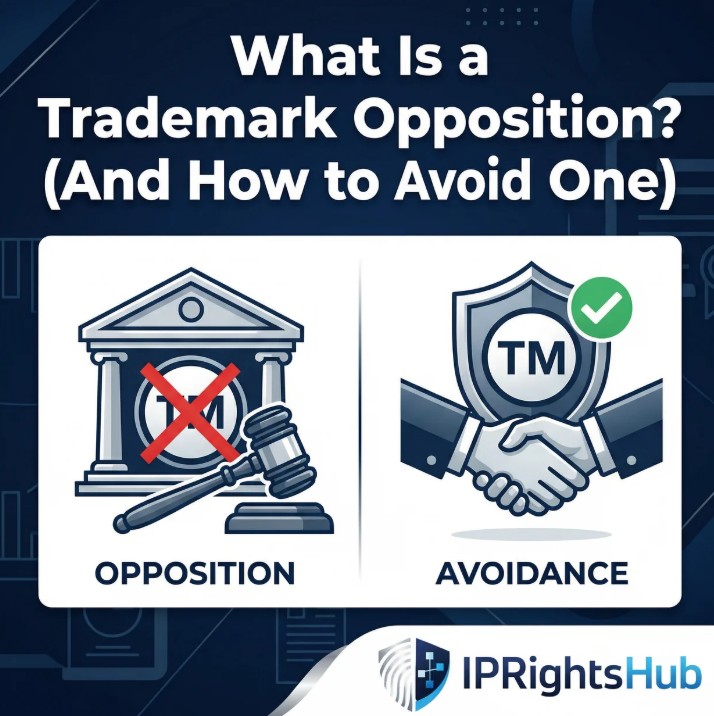
What Is a Trademark Opposition?
Advertisement
A trademark opposition is a formal legal challenge filed by a third party to stop your trademark application from being registered. It does not happen randomly — it has a specific trigger, a specific window, and a specific place where it is decided.
Here is the sequence: after you file a trademark application and the USPTO examines and approves it, your mark gets published in the Trademark Official Gazette — a weekly public bulletin. This kicks off a 30-day period during which anyone who believes your trademark would harm their rights can file a Notice of Opposition with the Trademark Trial and Appeal Board (TTAB).
Advertisement
If no one files within that window, your application moves toward registration. If someone does file, you now have an active opposition proceeding on your hands.
Oppositions affect approximately 5% of new applications — less common than most founders fear, but the consequences of being unprepared are serious enough to understand before you name your brand.
Need help? Our tools can help you identify potential IP conflicts before they become costly problems. Try a free scan →
What Triggers a Trademark Opposition?
Advertisement
The most common trigger is likelihood of confusion — meaning the opposer argues that your mark is similar enough to theirs that consumers might confuse the two brands. This is not just about identical names. Marks that are similar in sound, appearance, or meaning, applied to related products or services, can be enough.
Other grounds for opposition include:
- Your mark is merely descriptive of your product or service (e.g., "Fast Coffee" for a coffee shop)
- Your mark is generic for your category
- Your mark dilutes a famous brand, even without direct confusion
- The opposer claims you are not actually using the mark in commerce
- Your mark is geographically misdescriptive
Advertisement
The opposer must have legal standing — meaning they have to prove they have a real, personal stake in the outcome. They cannot file simply because they dislike the name or want to slow down a competitor. However, the standing bar is intentionally low, and a business with a registered mark in a similar category almost always qualifies.
Need help? Our tools can help you identify potential IP conflicts before they become costly problems. Try a free scan →
Is a Trademark Opposition the Same as Being Sued?
No — and this is one of the most important things to understand.
Advertisement
A trademark opposition is an administrative proceeding, not a lawsuit. It takes place entirely before the TTAB, not in a federal court. There are no monetary damages on the table. No one is asking a judge to order you to pay anything. The only question being decided is whether your trademark should be allowed to register.
That said, it is a formal legal proceeding — with deadlines, discovery periods, evidence submissions, and a binding decision. It can take anywhere from a few months (if settled early) to two or three years (if it goes all the way to a TTAB decision).
You can still use your brand name while a trademark opposition is pending. Opposition affects registration, not use. Your ability to operate under your name continues — only the federal registration is on hold.
Advertisement
What Happens After a Notice of Opposition Is Filed?
Once a Notice of Opposition is officially filed, the TTAB notifies both parties and sets a trial calendar. Here is what the process typically looks like:
Step 1: Answer the Opposition
Advertisement
You have 40 days to file a formal Answer responding to each allegation in the Notice. Missing this deadline results in a default judgment against you — your application is abandoned.
Step 2: Discovery Phase
Need help? Our tools can help you identify potential IP conflicts before they become costly problems. Try a free scan →
Both sides can request documents, ask questions, and gather evidence. This is where the legal costs begin to accumulate if the case is contested.
Advertisement
Step 3: Evidence and Briefs
Each party submits evidence and written arguments. Oral hearings are optional and rare.
Step 4: TTAB Decision
Advertisement
The Board issues a final ruling. If you lose, your application is rejected. If you win, registration proceeds. Either side can appeal to a federal court.
Need help? Our tools can help you identify potential IP conflicts before they become costly problems. Try a free scan →
The Settlement Path (Most Common)
Most trademark oppositions never reach a final decision. The majority settle through negotiation — often a coexistence agreement that defines how both brands can operate without creating consumer confusion, or a class restriction that narrows the scope of your registration.
Advertisement
How Much Does a Trademark Opposition Cost?
Filing a Notice of Opposition costs $600 per class in USPTO government fees (as of 2025). Extensions of time cost additional fees beyond the first free 30-day extension.
For the party defending against an opposition, there are no filing fees — but attorney costs can escalate quickly. A straightforward negotiated settlement might cost a few thousand dollars in legal fees. A fully contested proceeding that goes to a TTAB decision can cost $15,000–$50,000 or more in total.
Advertisement
This is why the best strategy is prevention.
How to Avoid a Trademark Opposition
The single most effective way to avoid a trademark opposition is a thorough clearance search before you file — and ideally before you commit to a name at all.
Advertisement
What a clearance search covers:
- Federal registrations (USPTO database)
- Pending applications — marks that are filed but not yet registered can still form the basis of an opposition
- Common law use — unregistered marks that are actively used in commerce carry rights too
- Phonetic similarity — names that sound like existing marks even if spelled differently
- Design and logo similarity — for logo trademarks
- Class overlaps — two similar names in adjacent or related industries
Need help? Our tools can help you identify potential IP conflicts before they become costly problems. Try a free scan →
A basic USPTO TESS search is a starting point, but it only covers exact and close matches in registered marks. Professional clearance searches go much further.
Advertisement
Practical steps to reduce opposition risk:
- Search before you name. Do not fall in love with a brand name before checking if it is clear. Rebranding after launch is far more expensive than changing the name before it.
- Search before you spend. Do not invest in logo design, packaging, or domain infrastructure until you have verified the name is clear.
- Check beyond the USPTO. State trademark databases and common law use (Google, business registries, industry directories) matter too.
- Choose a distinctive name. Generic and descriptive names are harder to protect and easier to challenge. Invented or suggestive names (think Spotify, Notion, Monzo) are both stronger and safer.
- File trademark classes carefully. Overly broad class filings increase the risk of overlap with other brands. Narrow your description to what you actually offer.
- Monitor after filing. Once you file, someone could file a conflicting application the next day. The USPTO does not notify you. Trademark monitoring services watch the Gazette and alert you so you can act — either by opposing them or adjusting your strategy.
What Is Trademark Bullying?
Advertisement
Trademark bullying happens when a larger company files an opposition against a smaller brand, not because there is genuine confusion, but because they have the resources to make the process expensive and intimidating.
Need help? Our tools can help you identify potential IP conflicts before they become costly problems. Try a free scan →
If you receive a Notice of Opposition, do not assume the filer has a strong case. Assess the actual merits: how similar are the marks, how related are the products, and how likely is genuine consumer confusion? Many oppositions are settled — or successfully defended — before any formal proceeding takes full shape.
An attorney experienced in TTAB proceedings can evaluate the strength of the opposition quickly and help you decide whether to fight, negotiate, or explore a coexistence agreement.
Advertisement
What to Avoid
- Do not ignore a Notice of Opposition. The 40-day deadline to answer is absolute. Missing it ends your application.
- Do not assume USPTO approval means you are safe. Approval triggers the opposition window — it does not close it.
- Do not assume a domain name protects your brand. Domain registration carries no trademark rights.
- Do not skip the clearance search to save money. Rebranding after a forced opposition or cease-and-desist will cost many times more.
- Do not rely on a Google search alone. Pending USPTO applications and common law uses will not surface in a standard web search.
- Do not confuse opposition with trademark cancellation. Opposition blocks registration before it happens. Cancellation challenges a mark that is already registered — and can be filed at any time.
When Does Trademark Opposition Risk Peak?
Advertisement
The riskiest moment is the publication window — the 30 days after your mark appears in the Official Gazette. But the risk starts earlier: the moment you choose a name that is too similar to an existing brand, you have already created the conditions for an opposition.
The second peak risk window is the five-year mark after registration. Some grounds for cancellation (the post-registration equivalent of opposition) become unavailable after five years, meaning your rights solidify. This is why brands that survive their first five years and maintain active use gain significantly stronger protection.
Next Steps
Advertisement
If you have not yet filed a trademark application, run a similarity search before you commit to your name. Check federal registrations, pending applications, and common law use across your category.
If your application is currently pending, start monitoring the Official Gazette so you are aware of any conflicting marks filed during your waiting period.
Need help? Our tools can help you identify potential IP conflicts before they become costly problems. Try a free scan →
If you have received a Notice of Opposition, respond within 40 days, assess the strength of the opposing claim, and consider whether negotiation, a coexistence agreement, or a formal defence is the right path.
Advertisement
The earlier you act, the more options you have.

