Your Local Coffee Shop Just Hit 100K Views on TikTok Local Feed. Congratulations — And Here's Why You Might Need a Lawyer Now.
Advertisement
On February 11, 2026, TikTok launched the Local Feed across the United States. Within weeks, small businesses — coffee shops, boutiques, salons, restaurants, and independent creators — started getting discovered at unprecedented scale. The data is compelling: 84% of small business users say TikTok helps grow their business, and 74% use it specifically to connect with their local community.
But there's a catch nobody's talking about yet.
Advertisement
TikTok's Local Feed doesn't just make you visible to nearby customers. It accelerates your business from hyperlocal to regional to national visibility in days. And the moment you cross geographic boundaries, you step into legal territory where trademark law suddenly matters — a lot.
Your coffee shop called "Third Wave Coffee" in Portland? Powerful locally. But what happens when a viral video lands you customers in Seattle, where "Third Wave Coffee Roasters" is a registered trademark? Your boutique branded "Iconic"? Great for your neighborhood — until you realize five other companies have registered "Iconic" as a trademark in the fashion category.
Need help? Our tools can help you identify potential IP conflicts before they become costly problems. Try a free scan →
This isn't hypothetical. Small business owners are experiencing this right now, and most aren't prepared.
Advertisement
How TikTok's Local Feed Works — And Why It's a Trademark Inflection Point
The Local Feed is simple by design. When a user opts into location sharing (18+, optional), TikTok shows them content from creators and businesses in their geographic area. Posts are ranked by location proximity, topic relevance, and recency. For small businesses, it's a direct pipeline to discovery without needing viral FYP hits or massive follower counts.
That's also why it's a legal inflection point.
Advertisement
Traditional trademark law has a geographic component built in. If you operate a coffee shop called "Third Wave Coffee" in Portland and nobody else is using that name nearby, you have what's called "common-law trademark rights" — automatic protection from use, even without federal registration. These rights are geographically limited to your market. The trademark holder in Seattle doesn't know you exist. You don't conflict. Life is good.
Need help? Our tools can help you identify potential IP conflicts before they become costly problems. Try a free scan →
But the moment TikTok's algorithm surfaces your Portland coffee shop to users in Seattle, California, and beyond, you've crossed the geographic boundary where those common-law rights protect you. You're now in the territory where registered trademarks — federal registrations that apply nationwide — can claim infringement.
One viral video on Local Feed can do in 72 hours what used to take a small business years: reach a national audience. And that same video can expose you to trademark claims from people you didn't know existed.
Advertisement
The Real Trademark Risk Small Business Owners Are Missing
Let's be specific about what "trademark infringement" means in this context.
A trademark is any word, logo, slogan, or design that identifies the source of a product or service. When you name your business, that name is a trademark — it tells customers who's behind the product or service. Trademark law exists to prevent consumer confusion: If I see a product labeled "Nike," I expect it's made by Nike, not by someone else.
Advertisement
Trademark infringement happens when someone uses a mark that's confusingly similar to a registered mark, in a way that's likely to confuse consumers about the source. "Confusingly similar" is the legal standard, and it's broader than you'd think.
Here's the problem: Most small business owners don't know whether their business name is already trademarked by someone else. They pick a name they like, launch the business, and assume they're fine. If nobody in their town is using the same name, it feels safe.
It isn't.
Advertisement
The United States Patent and Trademark Office (USPTO) maintains a database of all registered trademarks. There are millions of them. Some are obvious ("Apple" for electronics). Others are niche ("Third Wave Coffee Roasters" for coffee services, registered in Class 43 — food and beverage services). Many small business owners have never checked whether their business name appears in that database.
When TikTok's Local Feed exposes your business to a national audience, you're now operating in the same marketplace as every registered trademark holder in your goods or services category. If there's a conflict — or even "confusingly similar" overlap — you become a potential infringement target.
Need help? Our tools can help you identify potential IP conflicts before they become costly problems. Try a free scan →
Real Scenarios: How Small Businesses Discover Trademark Conflicts (Too Late)
Advertisement
Scenario 1: The Portland Coffee Shop
A third-wave coffee shop in Portland called "Third Wave Coffee" builds a cult following locally. Posts to TikTok consistently: behind-the-scenes brewing, origin stories, customer moments. On February 18, TikTok Local Feed launches. Two weeks later, a video showing the shop's new location hits 150K views, driven by Local Feed distribution to users in the Pacific Northwest.
Three weeks after that video, the shop owner gets an email from a lawyer representing "Third Wave Coffee Roasters," a Seattle-based chain with a federally registered trademark (Reg. No. 5,827,493, Class 43 — food/beverage services).
Advertisement
The email is a cease-and-desist notice. It alleges trademark infringement and unfair competition. It demands the coffee shop stop using the name, redesign their branding, and consider damages.
Need help? Our tools can help you identify potential IP conflicts before they become costly problems. Try a free scan →
The coffee shop owner has a few options, none of them good:
- Option 1: Rebrand. New name, new logo, new social accounts, new signage, new legal documents. Cost: $5K–$20K. Lost time: 2–3 months. Brand equity lost: Everything they built on TikTok and locally.
- Option 2: Negotiate. Hire a trademark attorney ($2K–$5K just for initial consultation) and try to negotiate a coexistence agreement or licensing deal with the Seattle chain. This might work if the businesses aren't in direct competition, but it's not guaranteed.
- Option 3: Ignore it. Hope the cease-and-desist is a bluff. This is risky. If the other company sues, the coffee shop faces court costs ($10K–$50K+) and potential damages.
Advertisement
None of these were necessary. A $50 trademark search on the USPTO website, done before Local Feed launched, would have revealed the conflict. The coffee shop could have chosen a different name, built Local Feed presence from day one under a protected mark, and avoided the whole problem.
Scenario 2: The Fashion Boutique
A boutique fashion shop in Austin calls itself "Iconic" — a common descriptor, appealing to their Gen Z audience. The shop opens, posts to TikTok, gets some traction. Local Feed launches. Their aesthetic-driven content (minimalist styling, trend analysis) starts surfacing to users in Texas, then beyond.
Advertisement
The owner doesn't realize that "Iconic" is a registered trademark in apparel. Neither do the five other companies that also have "Iconic" registered in various apparel subcategories (Class 25 — clothing, footwear, headwear). When the boutique's TikTok reach expands beyond Austin, it's potentially infringing on multiple registered marks.
The risk compounds because fashion is a visual category — the USPTO doesn't just protect the word "Iconic," but the specific way each company uses the mark (colors, placement, associated imagery). The Austin boutique's distinctive visual presentation could be seen as even more confusingly similar than just the name alone.
Scenario 3: The Salon Caught Between Multiple Marks
Advertisement
A salon in Miami called "Glow Studio" builds a strong local following. TikTok Local Feed expands their reach. Then the owner discovers that "Glow Studios" (note the plural) is a registered trademark held by a salon chain operating nationwide.
Are they infringing? The marks are similar but not identical. The businesses are in the same category (services — salon/personal care). But one key question: Are they in the same geographic market yet? If "Glow Studios" has locations in Florida, the conflict is immediate. If they're only in California, the conflict might be delayed but still real.
Need help? Our tools can help you identify potential IP conflicts before they become costly problems. Try a free scan →
The owner faces uncertainty and risk — exactly the scenario that trademark law is supposed to prevent, but also the scenario most small business owners are unprepared for.
Advertisement
Why TikTok's Algorithm Makes Trademark Conflicts Inevitable
TikTok's Local Feed isn't the first platform to enable local discovery. Google Maps, Yelp, Instagram's Location feature, and even Facebook have all enabled local business visibility for years.
But TikTok's Local Feed is different in one critical way: velocity.
Advertisement
A business can go from "nobody's heard of us" to "50K views in a week" on TikTok with no paid advertising, no influencer partnerships, and no earned media. It's pure algorithmic luck. And that velocity is exactly what triggers trademark risk.
Need help? Our tools can help you identify potential IP conflicts before they become costly problems. Try a free scan →
Compare it to a traditional expansion model: A local business would typically expand to a new city intentionally. They'd open a second location, invest in local marketing, and do basic due diligence (including trademark clearance) as part of the business plan.
On TikTok Local Feed, that expansion happens by accident. A single viral video can drive awareness in cities where you don't have customers, don't have locations, and didn't plan to operate. You're suddenly "doing business" in new markets without meaning to — and trademark law doesn't care about intent.
Advertisement
That's the inflection point. And it's happening to thousands of small businesses right now.
How to Check If Your Business Name Is Already Trademarked
The good news: You can do a trademark search yourself, for free, in about 15 minutes.
Advertisement
Step 1: Search the USPTO Database
Go to tmsearch.uspto.gov. This is the official U.S. Patent and Trademark Office search tool. You can search for registered trademarks and pending applications.
Search for:
Advertisement
- Your exact business name
- Common variations (singular/plural, hyphens, spacing, abbreviations)
- Phonetically similar versions (names that sound like yours)
For each result, look at:
Need help? Our tools can help you identify potential IP conflicts before they become costly problems. Try a free scan →
- The mark itself (is it the same or similar?)
- The goods/services classification (is it in your category?)
- The registration status (is it active?)
- The owner (who holds it?)
Advertisement
If you find an exact match in your goods/services category with an active registration, that's a red flag. If you find similar marks, you need to evaluate whether the goods/services overlap and whether consumers might confuse them.
Step 2: Search Google and Your Industry
Beyond the USPTO, search Google for your business name + your goods/services. Search industry directories, social media, and regional business databases. You're looking for established businesses that might have common-law trademark rights (use-based rights, even without federal registration).
Advertisement
Step 3: Consider a Professional Search (Optional)
Need help? Our tools can help you identify potential IP conflicts before they become costly problems. Try a free scan →
If your business is scaling and trademark protection matters, a professional trademark search (via a service like Trademark.com, JUSTIA, or a trademark attorney) costs $200–$500 and includes:
- Comprehensive federal, state, and common-law searches
- Analysis of similar marks and potential conflicts
- A report you can use as evidence of due diligence
- Professional advice on risk level
Advertisement
For a small business about to scale on TikTok, this is cheap insurance.
Step 4: Evaluate Your Risk
After searching, ask yourself:
Advertisement
- Is there an exact match in my goods/services category? High risk. Consider rebranding or consulting a trademark attorney.
- Is there a similar mark in a related category? Medium risk. Depends on how close the goods/services are and how similar the marks are.
- Are there any uses of the same name by established local competitors? Medium risk. They might have unregistered common-law rights.
- Is my mark truly unique in my market? Low risk, but federal registration is still recommended if you plan to scale.
The Pre-Local-Feed Checklist: What to Do Before You Go Viral
If you're a small business thinking about leveraging TikTok Local Feed, here's your pre-launch checklist:
Advertisement
1. Do a Free Trademark Search (15 minutes)
Search the USPTO database for your business name, variations, and phonetically similar marks. Document what you find.
Need help? Our tools can help you identify potential IP conflicts before they become costly problems. Try a free scan →
2. Search Google and Your Industry (15 minutes)
Advertisement
Search your business name + goods/services on Google, industry directories, social media, and regional business databases. Look for competitors or established businesses using the same or similar names.
3. Evaluate Your Risk (10 minutes)
Based on your searches, rate your trademark risk as low, medium, or high. If medium or high, move to step 4.
Advertisement
4. Consult a Trademark Attorney (If Medium/High Risk)
Need help? Our tools can help you identify potential IP conflicts before they become costly problems. Try a free scan →
A 30-minute consultation with a trademark attorney costs $150–$300 and can help you understand your specific risk. They can advise whether you need to rebrand, pursue federal registration, or negotiate with a mark holder.
5. Register Your Trademark (If Scaling)
Advertisement
If your business is scaling and you own a distinctive name, federal trademark registration protects you nationwide. Cost: $250–$400 per class of goods/services (USPTO fee + attorney fees, if you use a lawyer). Takes 6–12 months. But it's the strongest protection available.
6. Monitor for Infringement
Once you're on Local Feed and gaining traction, monitor TikTok, other platforms, and your industry for anyone infringing on your trademark. Use TikTok's IP Protection Center to report violations.
Advertisement
This whole checklist takes about an hour, costs $0–$500, and can prevent a rebranding nightmare down the road.
What Happens If You Discover a Conflict After Going Viral
If you're already on TikTok Local Feed, already have traction, and just discovered a trademark conflict, you have options:
Advertisement
Option 1: Coexistence Agreement
If the trademark holder agrees that your business doesn't directly compete with theirs, they might sign a coexistence agreement allowing you both to use similar marks in different markets or goods/services categories. This requires negotiation with their attorney.
Need help? Our tools can help you identify potential IP conflicts before they become costly problems. Try a free scan →
Option 2: Transition to a New Brand
Advertisement
Rebrand your business to a name that doesn't conflict. This is painful — you lose all accumulated brand equity on TikTok — but it's sometimes the only option if the conflict is severe.
Option 3: Challenge the Trademark Registration
In rare cases, a trademark registration can be challenged if it's invalid (you have evidence it was registered in bad faith, or the holder abandoned it). This is expensive and requires an attorney, but it's possible.
Advertisement
Option 4: Negotiate a License or Assignment
Need help? Our tools can help you identify potential IP conflicts before they become costly problems. Try a free scan →
If the trademark holder is open to it, you might pay them for a license to use the mark in your geographic market or goods category. This is negotiated case-by-case.
The key: Don't ignore a cease-and-desist or infringement threat. Consult an attorney immediately. Ignoring it only makes the situation worse legally and more expensive.
Advertisement
Why Small Businesses Should Care About Trademark Before They Scale
Here's the founder perspective: Trademark protection is one of the highest-ROI things a small business can do before scaling.
Think about the math:
Advertisement
- Cost of a federal trademark registration: $250–$500
- Cost of a professional trademark search: $200–$500
- Cost of rebranding after going viral: $5K–$20K
- Cost of defending yourself in a trademark dispute: $10K–$50K+
A $500 investment in trademark clearance and registration takes about 6 months (the pendency time for federal registration) but protects you as you scale on Local Feed. By the time your business goes viral, your trademark is registered and protected.
Compare that to discovering a conflict six months into your Local Feed success, when you've built brand equity, customer loyalty, and social media presence — all of which you'd have to abandon if you rebrand.
Advertisement
The second dynamic is brand equity: Once you've accumulated traction on TikTok under your business name, that name is worth something. It's associated with your products, your voice, your visual identity. Rebranding destroys that association. Protecting your name with federal registration means that equity is legally defended.
The third dynamic is competitive advantage: In competitive categories (salons, coffee shops, boutiques, restaurants), a registered trademark is a signal to the market and to competitors that you're serious. It's also a barrier to entry — competitors can't just copy your exact name because you own it.
Need help? Our tools can help you identify potential IP conflicts before they become costly problems. Try a free scan →
Frequently Asked Questions
Advertisement
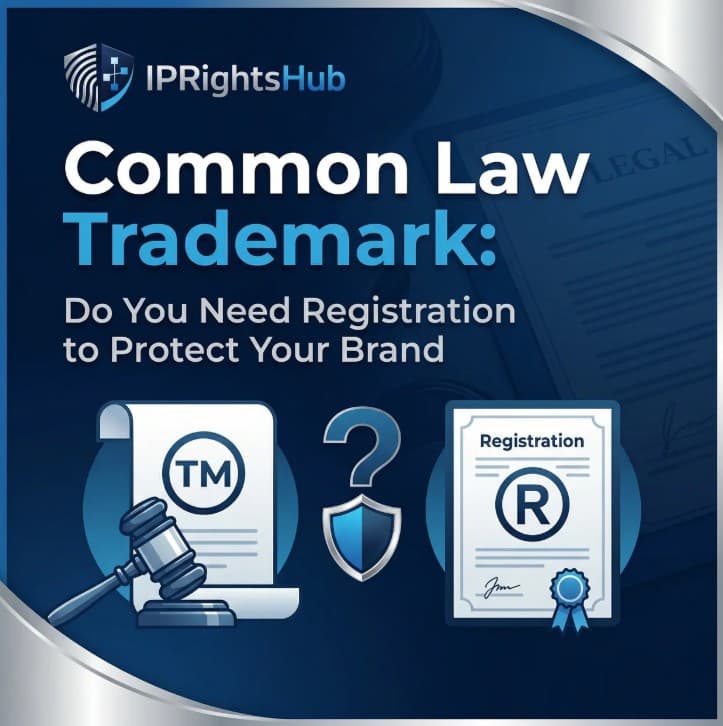
What's the difference between common-law trademark rights and federal registration?
Common-law trademark rights come from use. The moment you start using your business name to identify your business, you own a trademark. But common-law rights are geographically limited to the area where you're actually using the mark and where consumers know you. Federal registration (through the USPTO) gives you nationwide protection and the right to sue for infringement in federal court. For a small business about to scale nationally (via TikTok Local Feed), federal registration is worth the $250–$500 investment.
If my business name isn't trademarked by anyone, can I use it?
Advertisement
Probably, but it depends. Just because the USPTO database is empty doesn't mean the name is safe. Someone might have common-law trademark rights through use (they just didn't register federally). Or the name might be confusingly similar to a registered mark. That's why the multi-step search (USPTO + Google + industry directories) matters. If you find nothing, you're in good shape — but confirm with an attorney if you're scaling.
Need help? Our tools can help you identify potential IP conflicts before they become costly problems. Try a free scan →
How long does it take to get a federal trademark registration?
The USPTO examines applications in order, and the current average is 6–12 months for an initial decision. If there are no oppositions or office actions (rejections), you're granted. If there are conflicts, it could take longer. Plan for 6 months as a baseline, but expect 9–12 months to be safe.
Advertisement
What if TikTok removes my account for trademark infringement?
TikTok has an IP Protection Center where trademark owners can report infringements. If TikTok confirms you're violating a registered trademark, they can remove your content, suspend your account, or restrict your ability to post. This is why the pre-check matters: You want to know about conflicts before TikTok has to remove you.
Can I use a business name that's similar but not identical to a registered trademark?
Advertisement
It depends on how similar, and whether the goods/services overlap. Trademark law uses a "likelihood of confusion" standard. If a consumer might reasonably confuse your product with a registered mark, you're infringing. The more similar the marks AND the more similar the goods/services, the higher the risk. An attorney can help you evaluate specific cases.
How do I protect my own trademark if someone else is using it on TikTok?
If you own a registered trademark and someone is using it (or a confusingly similar mark) on TikTok, you can report it through TikTok's IP Protection Center. Provide your trademark registration, images or videos showing the infringing use, and a detailed explanation. TikTok investigates and removes infringing content if confirmed. For repeat infringers, TikTok can suspend accounts.
Advertisement
What if I'm a creator using another brand's name in my TikTok content?
Fair use allows some uses of trademarks in context (reviews, comparisons, comments). But you can't use another brand's trademark in your account name, profile description, or in a way that implies you're affiliated with or endorsed by that brand without permission. TikTok Shop has strict rules here: You must have brand authorization to sell products bearing another company's trademark.
Need help? Our tools can help you identify potential IP conflicts before they become costly problems. Try a free scan →
Should I register my trademark internationally if I'm only selling locally?
Advertisement
Not immediately. Federal (U.S.) registration is $250–$500 and covers the U.S. market. International registration through the Madrid Protocol is more expensive and covers multiple countries. Register federally first, and if you plan to scale internationally, expand registration later. Most small businesses don't need international protection on day one.
If I'm already operating without federal registration, can I register now?
Yes. You can file a trademark application based on use in commerce or intent to use. If you're already using the mark (on your products, in commerce, on TikTok), you can claim "use in commerce" and file. The only downside is that another company could have filed before you, which is why the search matters.
Advertisement
What's the cheapest way to protect my trademark?
Need help? Our tools can help you identify potential IP conflicts before they become costly problems. Try a free scan →
- Free: Do your own USPTO search and Google search. If clear, start using the name and document your use (screenshots, dates, context). This creates common-law rights.
- Cheap ($250–$400): File for federal registration yourself (without an attorney) through the USPTO. You'll fill out the form, pay the fee, and respond to office actions if needed.
- Affordable ($500–$1500): Use a service like LegalZoom, Rocket Lawyer, or a local trademark attorney to file on your behalf. They handle the paperwork and office action responses.
The federal registration route is the strongest and not that expensive compared to the cost of rebranding if you wait.
Advertisement
What This Means for Your Business Right Now
TikTok's Local Feed is transformative for small businesses. It's democratizing discovery. It's enabling coffee shops, boutiques, and creators to reach national audiences without needing traditional marketing budgets or viral luck on the FYP.
But with that opportunity comes responsibility: The moment your business reaches beyond your local market, you need to know whether your business name is legally defensible.
Advertisement
The good news is that trademark protection is achievable, affordable, and doable before you scale. A 15-minute search costs nothing. A professional search costs $200–$500. Federal registration costs $250–$500 and takes 6–12 months.
All of this is cheaper and faster than rebranding after you've built a following.
Here's the actionable takeaway: Before you commit to your business name on TikTok Local Feed, do the search. If it's clear, register it federally. If there's a conflict, address it now while you're small and rebranding is just a rebrand, not a disaster.
Advertisement
The businesses that will win on TikTok Local Feed in 2026 won't just be the ones with the best content or the best products. They'll be the ones who did their IP homework first.