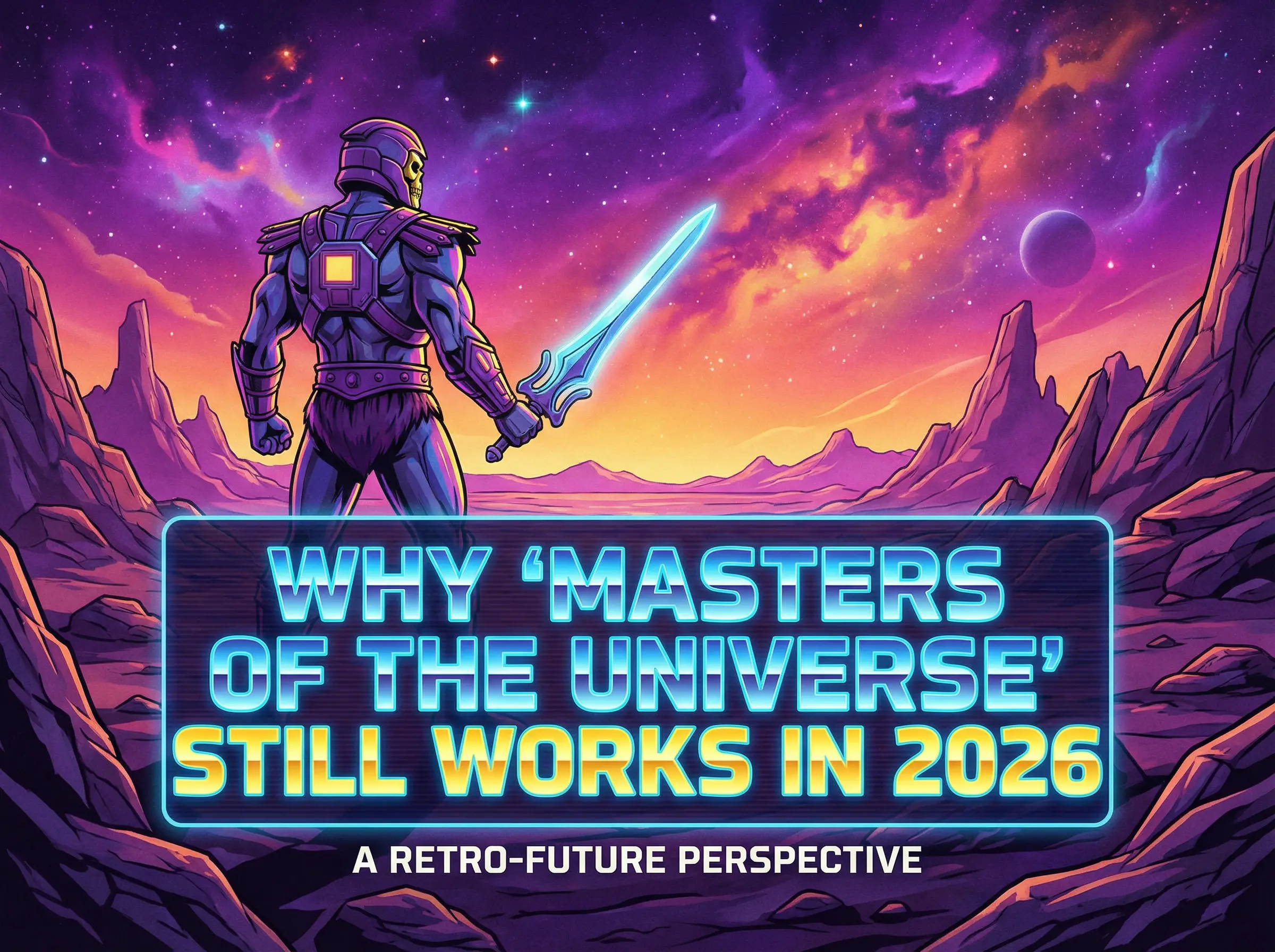
Why this question keeps resurfacing
Advertisement
Whenever a long-running franchise returns, especially in live-action form, skepticism follows. Audiences have seen familiar properties revived unsuccessfully, diluted, or reshaped in ways that feel disconnected from their origins. As attention builds around the upcoming adaptation of Masters of the Universe, many people are not asking what it is, but why it still matters.
This question is not driven by hype. It reflects real uncertainty about tone, faithfulness, and relevance. Understanding why Masters of the Universe still works requires examining its underlying structure, not just its surface aesthetics or its history as an 1980s toy line.
What core idea keeps the franchise understandable across generations?
Advertisement
At its foundation, Masters of the Universe is built around a simple, repeatable idea: transformation paired with responsibility. The central arc does not rely on complex lore or layered continuity. Instead, it presents a clear contrast between limitation and power, secrecy and revelation.
This structure translates easily across age groups because it mirrors a common human experience. Gaining strength, confidence, or authority comes with consequences. The visual transformation may be fantastical, but the emotional logic is familiar. That clarity makes the story accessible even to viewers encountering it for the first time in 2026.
Why nostalgia alone does not explain its continued relevance
Need help? Our tools can help you identify potential IP conflicts before they become costly problems.Try a free scan →
Nostalgia often explains attention, but not longevity. Many franchises generate brief interest without sustaining engagement. Masters of the Universe continues to resurface because its themes are not locked to a specific decade.
The setting of Eternia is intentionally abstract. It blends fantasy, science fiction, and myth without tying itself to contemporary trends. This abstraction allows each new iteration to shift emphasis without breaking the core identity. As a result, the franchise can be reinterpreted visually or tonally while preserving its central appeal.
Advertisement
Why fans feel uncertain about the 2026 adaptation
A recurring question surrounding the 2026 film is whether concern is justified. Fans express hesitation not because the property is returning, but because adaptations often struggle to balance reinvention with recognition.
Much of this uncertainty stems from unclear communication rather than confirmed changes. Many summaries focus on casting announcements or release timelines while avoiding deeper discussion of narrative intent. Without context, audiences fill the gaps with assumptions about tone, canon changes, or genre drift. This uncertainty is amplified when different adaptations exist without a single, definitive version to reference.
How canon flexibility is both a strength and a challenge
Advertisement
Unlike tightly serialized franchises, Masters of the Universe does not operate under one rigid canon. This flexibility allows new creators to reinterpret the material, but it also creates confusion among long-time fans.
For some, canon means the original animated series. For others, it includes later reboots or expanded media. When a new adaptation emerges, expectations vary depending on which version a viewer considers “authentic.” The absence of a universally agreed reference point explains why debates around faithfulness are persistent rather than new.
Need help? Our tools can help you identify potential IP conflicts before they become costly problems.Try a free scan →
Why casting choices trigger disproportionate reactions
Casting discussions often dominate early reactions, sometimes overshadowing story considerations. This happens because characters in Masters of the Universe are highly symbolic. Visual design, presence, and tone matter as much as dialogue or plot.
When fans react strongly to casting news, it usually reflects anxiety about how the character’s symbolic role will be interpreted. Concerns are less about the individual performer and more about whether the adaptation will respect the character’s function within the story’s moral framework.
Advertisement
How the franchise fits modern “kidult” culture
One reason Masters of the Universe remains viable in 2026 is its alignment with modern “kidult” consumption patterns. Many adults engage with media they loved as children, not as passive nostalgia, but as shared cultural material they introduce to younger audiences.
The franchise’s straightforward moral structure makes it easy to bridge generations. Parents can share it without extensive explanation, while younger viewers can engage without prior knowledge. This dual accessibility gives the property a practical advantage in a fragmented media landscape.
Why comparisons to other modern reboots are often misleading
Some skepticism around Masters of the Universe arises from disappointment with unrelated reboots. However, not all franchises fail for the same reasons. Many struggle because their original appeal depended on cultural conditions that no longer exist.
In contrast, Masters of the Universe was never grounded in realism or topical commentary. Its mythic framing allows it to exist outside specific historical moments. This makes it more resilient to reinterpretation than franchises whose meaning depends heavily on period-specific context.
Advertisement
What current coverage often fails to explain
Most high-ranking pages focus on factual updates: release dates, casting lists, or production announcements. While useful, this information does not address why people feel uncertain or invested.
What is often missing is an explanation of why the franchise’s structure still works. Without that context, audiences are left to assume that interest is driven purely by nostalgia, which does not reflect the full picture. This gap in explanation contributes to hesitation rather than resolving it.
Why the franchise still functions culturally in 2026
Advertisement
Masters of the Universe persists because it operates as a modern myth rather than a fixed story. Myths endure when their structure remains useful, even as details change. The franchise continues to offer a clear narrative of power, identity, and responsibility without demanding exhaustive background knowledge.
This adaptability explains why it continues to resurface during periods of cultural uncertainty. It provides a familiar framework that can absorb new interpretations while remaining recognizable.
Conclusion: why the question itself is revealing
Asking why Masters of the Universe still works in 2026 reveals more about audience expectations than about the franchise itself. The property has always relied on clarity, symbolism, and flexibility rather than strict continuity.
Understanding this helps explain both the excitement and the hesitation surrounding the new adaptation. The franchise endures not because it resists change, but because its core structure allows change without losing meaning.