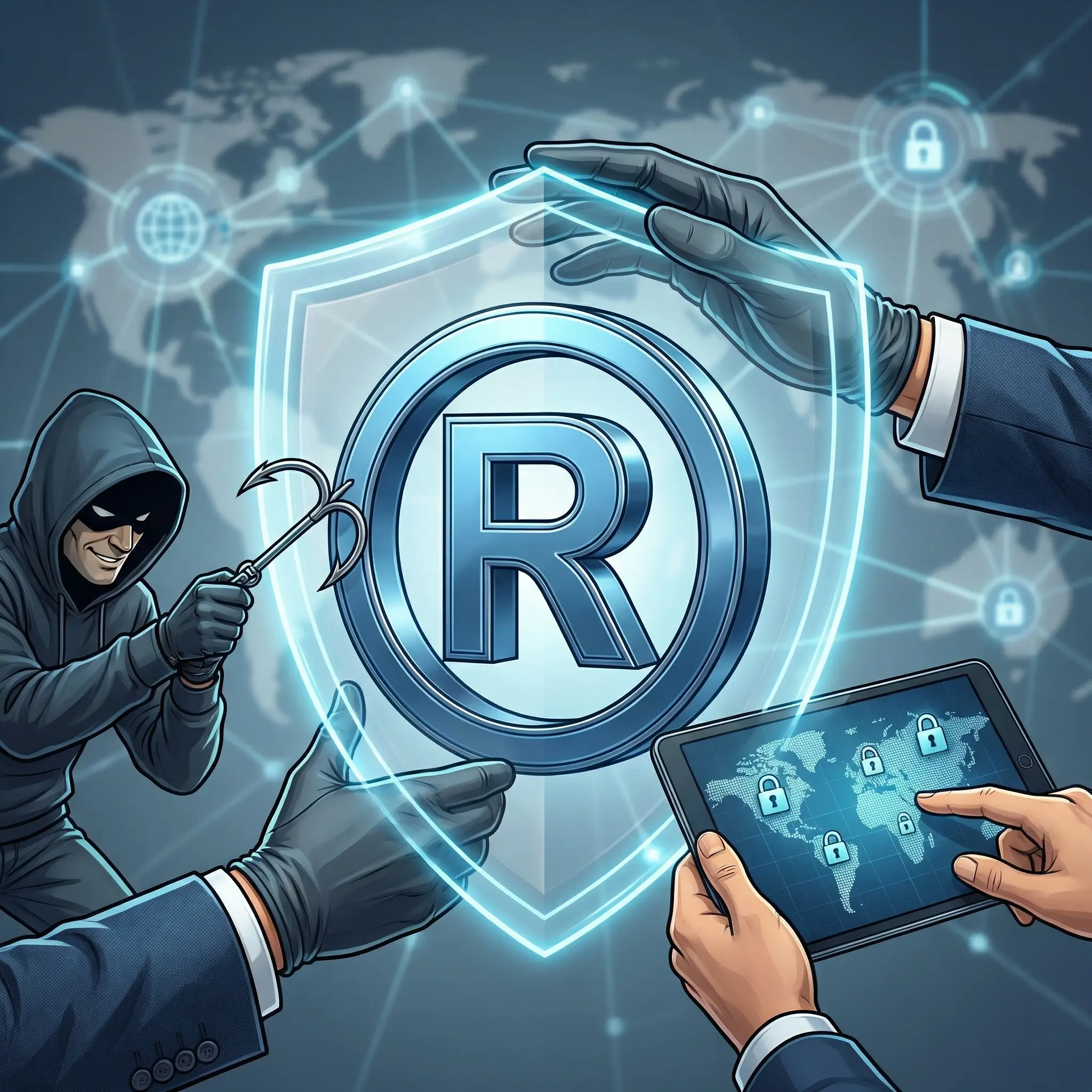
What Is Trademark Squatting?
Advertisement
Trademark squatting is when someone deliberately registers your brand name, logo, or business identity as a trademark in a country where you haven't registered it yet — then either demands payment for it or uses it to ride on your reputation.
It's not a mistake or a coincidence. It's a calculated strategy. Squatters monitor brand launches, product announcements, press coverage, and funding rounds. When they spot a brand gaining traction without international trademark protection, they file. Fast.
Advertisement
The practice is sometimes called bad-faith filing because the person registering has no intention of legitimately using the trademark — only of extracting money from the brand that does.
You don't have to be Apple or Tesla to be targeted. Squatters increasingly go after emerging brands precisely because early-stage founders rarely have international trademark coverage in place.
Need help? Our tools can help you identify potential IP conflicts before they become costly problems.Try a free scan →
How Does Trademark Squatting Actually Happen?
Advertisement
Understanding the mechanics is the first step to protecting yourself.
The First-to-File Problem
Most countries fall into one of two legal systems:
Advertisement
- First-to-Use: The trademark belongs to whoever used it first commercially. Countries in this group include the United States, Canada, Australia, India, and Singapore.
- First-to-File: The trademark belongs to whoever registered it first — regardless of who was using it. China, Japan, Germany, and most EU countries follow this system.
Need help? Our tools can help you identify potential IP conflicts before they become costly problems.Try a free scan →
In first-to-file countries, a squatter can register your brand name without ever having used it, sold a product under it, or had any legitimate connection to it. If you haven't filed there first, they win by default.
Who Squatters Target — And When
Advertisement
Squatters are systematic. Common trigger events that attract their attention:
- A Product Hunt launch that gains significant upvotes
- A press mention or media feature
- A public funding announcement (seed round, Series A)
- A viral social media moment
- A brand going live on Amazon or Etsy internationally
The window between "gaining visibility" and "getting squatted" can be weeks. Sometimes days.
Advertisement
What Is the Difference Between Trademark Squatting and Cybersquatting?
These terms are related but not the same thing.
| Trademark Squatting | Cybersquatting | |
|---|---|---|
| What's registered | A trademark at a national IP office | An internet domain name |
| Where it happens | Countries where you haven't filed | Any domain registrar globally |
| Legal framework | National trademark law, Madrid Protocol | ACPA (US), UDRP (international) |
| Goal of squatter | Sell the trademark back or exploit the brand | Sell the domain back or divert traffic |
Advertisement
Cybersquatting is a specific type of squatting focused on domain names. Trademark squatting covers a broader territory — including your brand name, logo, slogan, or transliteration of your name registered at a government IP office.
It's entirely possible to face both simultaneously. A squatter might register your trademark in China and buy the .cn domain at the same time.
Need help? Our tools can help you identify potential IP conflicts before they become costly problems.Try a free scan →
Can Trademark Squatting Happen to Small Businesses?
Advertisement
Yes — and it's increasingly common precisely because small brands and startups skip international trademark registration due to cost.
Squatters understand this. They target brands that have:
- Clear momentum (traffic, press, social following)
- A product category with international commercial potential
- No registered trademarks outside their home country
Advertisement
A brand doesn't need to be famous. It needs to look like it's heading somewhere. Squatters bet on future success, not current size.
Need help? Our tools can help you identify potential IP conflicts before they become costly problems.Try a free scan →
A real example: When Tesla wanted to sell cars in China, a squatter had already registered the "Tesla" trademark there. Tesla spent years in litigation before settling for an undisclosed amount. Starbucks faced the same problem in Russia. Apple paid $3.6 million to recover the iPhone trademark in China. These are extreme outcomes — but the same mechanism applies at every scale.
What Happens If You Get Squatted?
Advertisement
If you discover someone has registered your trademark in another country, you generally have three options — none of them cheap or fast:
Option 1: Negotiate and Pay
Often the path of least resistance. Squatters typically want money, not a legal battle. Paying can be faster and cheaper than litigation, but it sets a precedent and rarely includes restrictions preventing them from filing similar marks again.
Advertisement
Option 2: Litigate
You can challenge the registration as a bad-faith filing. Success depends on the country's laws, your ability to prove prior use or reputation, and local legal costs. In first-to-file countries, this is an uphill battle unless your brand is already internationally recognized.
Option 3: Rebrand for That Market
Advertisement
Sometimes the most pragmatic option for a bootstrapped founder. Entering a market under a modified name or regional variant avoids the legal fight entirely — but it has long-term brand consistency costs.
The honest reality: prevention is orders of magnitude cheaper than recovery. Legal fees, settlement costs, and rebranding expenses routinely run into tens of thousands of dollars. International trademark registration in key markets typically costs a fraction of that.
Need help? Our tools can help you identify potential IP conflicts before they become costly problems.Try a free scan →
When Should You Worry About Trademark Squatting?
Advertisement
You should be thinking about international trademark protection at these moments:
- Before launch: If your product has any international appeal, file in key markets before announcing publicly
- Before seeking press coverage: A TechCrunch or Product Hunt feature is a squatting trigger event
- Before raising funding: Public funding announcements attract squatter attention
- Before expanding: Don't wait until you're ready to enter a market — squatters count on that delay
- Before going viral: Once something spreads, the window closes fast
The single most common mistake founders make is thinking "we'll sort international trademarks when we actually expand there." By then, someone else may already own your name in that territory.
Advertisement
What to Avoid
Need help? Our tools can help you identify potential IP conflicts before they become costly problems.Try a free scan →
- Don't assume US trademark registration protects you globally. It doesn't. USPTO protection ends at US borders.
- Don't wait for press to trigger the filing. The announcement is the trigger.
- Don't assume only famous brands get targeted. Squatters bet on trajectory, not current size.
- Don't ignore transliteration. In markets like China, your brand name's phonetic equivalent in Chinese characters can be squatted separately from your English name. Both need protection.
- Don't overlook your distributors and partners. A known but underreported squatting pattern is partners or manufacturers filing trademarks in their own name — especially in first-to-file countries.
- Don't only monitor the trademark office. Amazon seller accounts, Etsy shops, and social media handles can also be used to build a squatting case against you in some jurisdictions.
How to Check If You've Already Been Squatted
Advertisement
Before filing anything, run these searches:
- WIPO Global Brand Database (globalbrands.wipo.int) — covers international registrations across Madrid System members
- EUIPO (euipo.europa.eu) — European Union trademarks
- CNIPA (cnipa.gov.cn) — China National Intellectual Property Administration
- USPTO TESS (tmsearch.uspto.gov) — United States trademark database
- TMView (tmdn.org/tmview) — multi-country European search tool
Search your exact brand name, common misspellings, and phonetic variations. In markets with non-Latin scripts, also search the transliterated version of your name.
Advertisement
How to Protect Yourself Going Forward
Step 1: Register in your home market first
File a trademark application in your home country as early as possible. This establishes your priority date and gives you a foundation for international filings.
Advertisement
Step 2: Use the Madrid Protocol for international coverage
The Madrid System (administered by WIPO) lets you file a single international application that covers up to 130+ member countries. It's significantly more cost-effective than filing separately in each country. You can pick and choose which member countries to include.
Need help? Our tools can help you identify potential IP conflicts before they become costly problems.Try a free scan →
Step 3: Prioritize first-to-file jurisdictions
Advertisement
If your home country is first-to-use (like the US), first-to-file markets carry the highest squatting risk. Prioritize China, Japan, the EU, and any market where you plan to manufacture, sell, or operate — even if that's 2–3 years away.
Step 4: Monitor actively after filing
Registration isn't a set-and-forget action. Use trademark watch services (WIPO's Madrid Monitor, national office alerts, or private watch platforms) to catch new filings that are similar to your marks. Early detection means you can file an opposition before a squatter's application becomes a registration.
Advertisement
Step 5: Document your use
Need help? Our tools can help you identify potential IP conflicts before they become costly problems.Try a free scan →
Keep records of when you first used your brand publicly: launch dates, sales receipts, press mentions, social media posts with timestamps. In first-to-use countries, and in bad-faith challenges globally, evidence of prior use is your strongest argument.
Next Steps
Advertisement
If you've never done a trademark search across international databases, that's the right starting point — especially in the markets most relevant to your growth trajectory. From there, understanding which countries follow first-to-file rules helps you prioritize where to file before you go public with anything significant.
International trademark registration through the Madrid Protocol is the most practical tool available to early-stage brands operating across borders. The window for protection is always open — but it closes the moment a squatter files ahead of you.