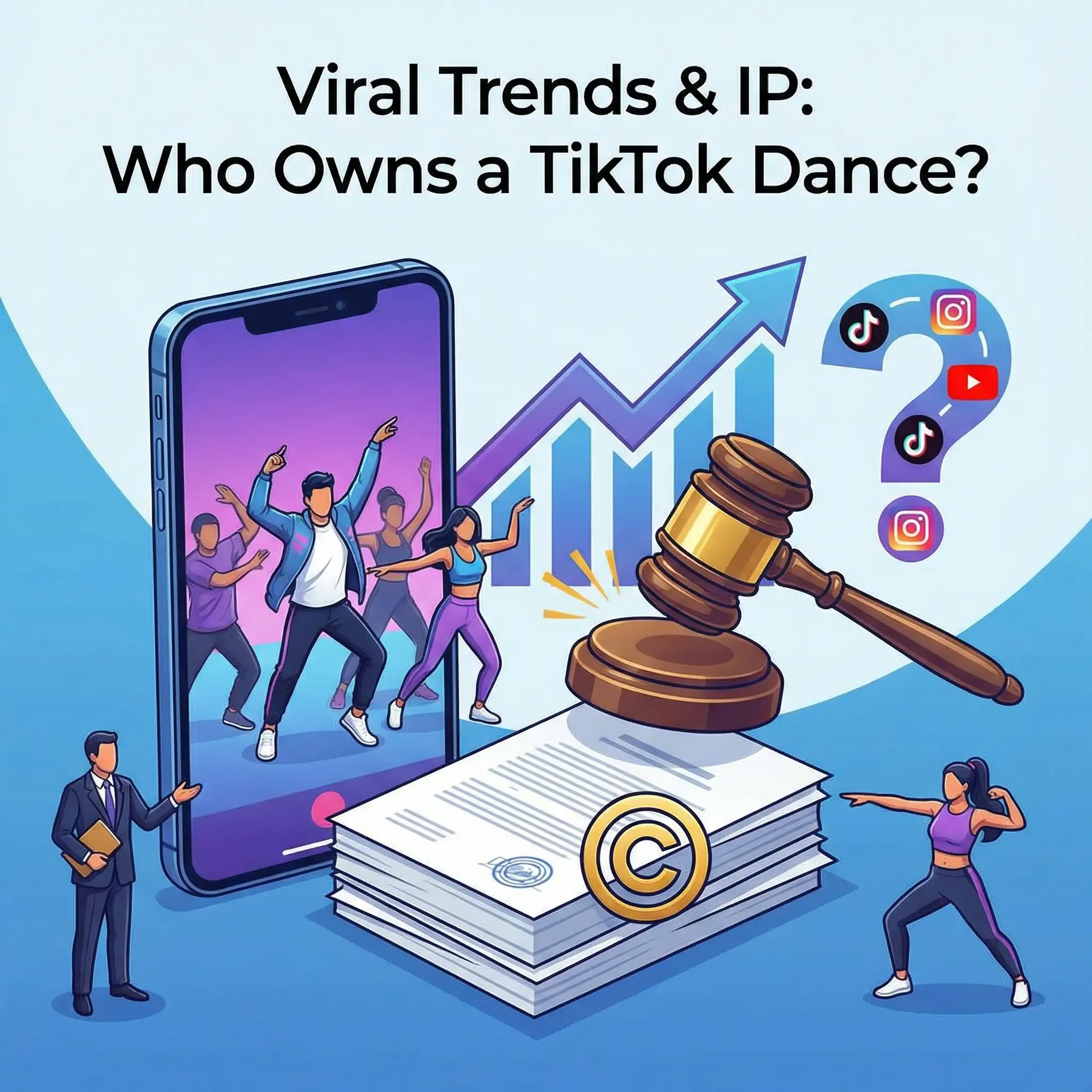
The Viral Phenomenon of TikTok Dances
Advertisement
TikTok thrives on short, repeatable dance routines set to trending audio. A single creator posts a 15–60 second routine, users duet or stitch variations, and suddenly millions perform the same moves. Hits like the Renegade, Savage, or Apple dance rack up billions of views.
This virality drives fame and opportunities—brand deals, tours, music video gigs—but rarely direct monetization for the original choreographer. The core question in 2026: Who actually owns a viral TikTok dance?
Advertisement
Is Choreography Copyrightable?
U.S. copyright law protects "choreographic works" fixed in a tangible medium (e.g., video recording) since the 1976 Copyright Act. Protection requires originality and sufficient length/complexity—ballets, modern dance pieces, and music video routines qualify.
Need help? Our tools can help you identify potential IP conflicts before they become costly problems.Try a free scan →
Short social dances or simple routines do not. The U.S. Copyright Office and courts exclude:
Advertisement
- Individual steps or poses.
- Social dance moves (e.g., the Twist, Macarena).
- Short sequences lacking narrative or thematic structure.
Most TikTok dances—typically 8–32 counts, repetitive, and designed for easy replication—fall into this "short and simple" category. Creators own the specific video recording automatically, but not the moves themselves.
Key Cases Shaping Dance Ownership (2025–2026 Landscape)
Advertisement
Recent disputes highlight evolving protections:
Need help? Our tools can help you identify potential IP conflicts before they become costly problems.Try a free scan →
Hanagami v. Epic Games (Fortnite "It's Complicated" emote): Ninth Circuit (2023, ongoing impact into 2025–2026) revived Kyle Hanagami's suit, ruling short sequences can be protectable if they form a cohesive "pose compilation" with creative choices. This lowered the bar slightly for music video-style routines but doesn't blanket-cover TikTok trends.
Kelley Heyer v. Roblox (Apple dance emote, 2025): Influencer Kelley Heyer settled with Roblox after suing over unauthorized use of her viral Charli XCX "Apple" dance in-game. The settlement underscores platforms negotiating when choreography is registered and distinctive.
Felix Burgos v. Epic Games (Touching the Sky emote, filed 2025): Choreographer alleges direct copying from Rauw Alejandro video. Case ongoing; highlights that registered, longer routines tied to commercial works have stronger claims.
Older Fortnite wave (Floss, Carlton, etc.): Most dismissed pre-2023 due to lack of registration or simplicity, but post-Hanagami shifts favor plaintiffs with documented, registered works.
No major TikTok-specific copyright rulings in 2025–2026 yet—disputes resolve via settlements or platform removals. Credit strikes (Black creators protesting uncredited trends) remain cultural, not legal, enforcement.
Advertisement
Why Most Viral TikTok Dances Remain Unprotected
Courts and the Copyright Office consistently hold:
- Moves must exceed "mere social dance steps."
- No protection for functional, easily improvised sequences.
- Virality relies on copying—enforcing copyright would kill the trend.
Advertisement
Examples like the Floss or Renegade are deemed too short/simple. Even registered works face fair use defenses if used transformationally (e.g., games, parodies).
Platform terms: TikTok grants broad licenses for duets/reactions, treating trends as community property.
Creator Implications and Real-World Outcomes
Advertisement
- Uncredited Virality: Original creators (often young, Black, or marginalized) lose opportunities when celebrities/influencers perform without tagging.
- Platform/Gaming Monetization: Fortnite/Roblox profit from emotes; post-2023, some creators now license (e.g., Epic pays for approved routines).
- Fair Use in User Videos: Duets/recreations generally qualify as transformative commentary or criticism—no infringement.
In 2026, longer/more complex routines (e.g., tied to music releases) fare better for registration/enforcement.
Need help? Our tools can help you identify potential IP conflicts before they become costly problems.Try a free scan →
Practical Steps for Dance Creators
Advertisement
- Register Key Works: Film full routines, register choreography with U.S. Copyright Office ($45–$65). Strengthens claims against commercial copying.
- Document Creation: Timestamp videos, post originals first, use watermarks.
- Leverage Platforms: Tag #dc @originalcreator; community pressure works where law doesn't.
- Negotiate Licensing: Approach games/brands directly for emotes/merch.
- Monitor Uses: Use tools to track copies.
Our solutions help:
- Scan for unauthorized commercial uses with IP-SAM™ Scanner.
- Prepare registrations via Copyright Registration Assistant.
- Track viral mentions with IP Monitoring Dashboard.
Advertisement
Outlook: Credit Over Copyright?
Need help? Our tools can help you identify potential IP conflicts before they become costly problems.Try a free scan →
The law lags behind culture—TikTok trends prioritize spread over ownership. Hanagami-era rulings offer hope for complex works, but pure viral dances stay in the public domain.
Creators win through cultural norms (credit etiquette) and proactive registration for pro-level routines. The future: More settlements, potential compulsory licensing debates, or platform-built credit systems.
Advertisement
Ready to protect your moves or scan for risks? Start a free IP-SAM™ scan today.