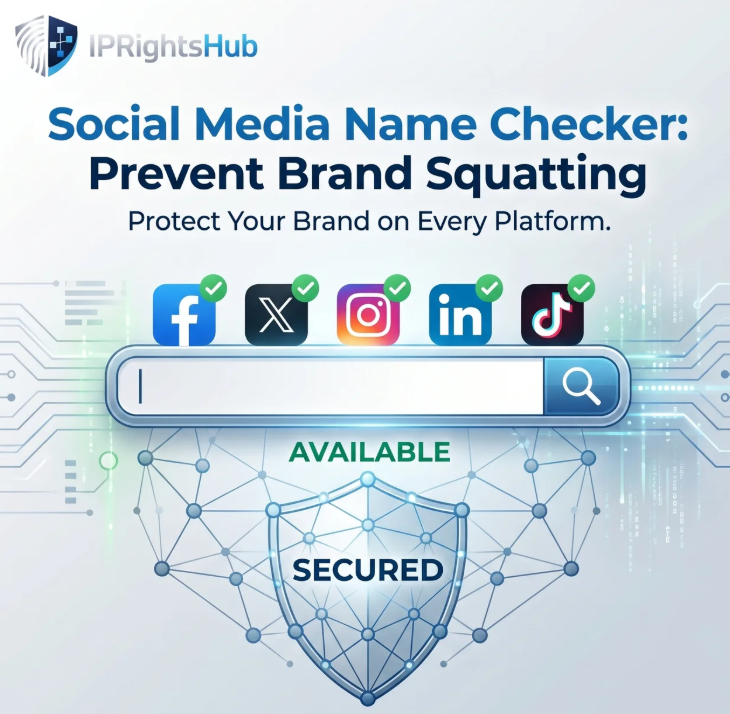
Brand squatting on social media is a real operational threat for founders, and it's getting worse. Someone registers your exact business name on Instagram, TikTok, and X before you do — then sits on it, either as a placeholder, an opportunistic reseller, or just an oblivious user who got there first. You discover this the night before your launch.
Advertisement
This guide covers how to check your brand name across platforms before you're exposed, what actually works when a handle is already taken, and where the law stops and platform policy begins.
🔍
Advertisement
- Check social media name availability across all major platforms before registering your LLC or buying a domain.
- Owning a trademark does not automatically give you rights to a matching social handle.
- Platforms only act on squatting claims when an account actively deceives consumers — not when it's just empty.
- Buying handles from squatters violates platform ToS and can get your account permanently banned.
- The best Plan B handles use professional modifiers that don't signal "we couldn't get our real name."
What Is Social Media Name Squatting?
Need help? Our tools can help you identify potential IP conflicts before they become costly problems. Try a free scan →
Social media name squatting is when someone registers a username matching your brand name without intent to actively use it — either to resell it, block you out, or simply because they got there first. It's distinct from cybersquatting (which covers domain names under the Anticybersquatting Consumer Protection Act) because social handles are governed entirely by each platform's Terms of Service, not federal law.
Advertisement
The legal line matters. ICANN's UDRP process exists for domain disputes. For social media, there is no equivalent arbitration body. You are completely at the mercy of Meta, TikTok, X Corp, or whoever runs the platform. And their support teams move slowly, apply high thresholds, and reject most trademark claims where the squatted account isn't posting anything.
Why Checking Early Is the Only Reliable Move
If a handle is taken before you launch, your options narrow fast. That's why checking across platforms should happen before you name the company, before you file the LLC, and before you pay a designer for a logo.
Advertisement
The cost of discovering a conflict at 11pm before your Product Hunt launch is orders of magnitude higher than spending 20 minutes with a name checker during ideation.
Need help? Our tools can help you identify potential IP conflicts before they become costly problems. Try a free scan →
What to check, in this order:
- The exact brand name on every platform you plan to use
- Common variations: underscores, periods, abbreviated versions
- Platform-specific character limits (X: 15 characters, TikTok: 24, Instagram: 30)
- Whether the "taken" handle actually resolves to an active profile or a dead URL
Advertisement
This last point matters more than people realise. A tool might show a name as "taken" when the account is actually banned, shadowbanned, deactivated, or reserved internally by the platform. Going to the URL directly and getting a 404 doesn't mean the name is free — it means it's in a limbo state, which still blocks registration.
Cross-Platform Name Checker Tools (2026)
Several tools scan multiple platforms simultaneously. The main ones founders use:
Advertisement
Namecheckr — scans the widest range of platforms, including niche ones. Free.
Namecheckup — cleaner interface, covers the major platforms well. Free.
Knowem — goes deeper, including trademark checks and a premium registration service. Paid tier available.
Advertisement
Username Buddy — generates variations if your primary name is taken, useful when you need a Plan B fast.
None of these tools tell you why a name shows as unavailable. That diagnosis — banned vs. active vs. reserved — requires manual checking on the platform directly.
Need help? Our tools can help you identify potential IP conflicts before they become costly problems. Try a free scan →
The Trademark Fallacy (What Most Founders Get Wrong)
Advertisement
Owning a registered trademark does not give you the right to claim a matching social media handle. This is probably the single most common misconception in this space, and platforms explicitly reject trademark reports when the squatted account isn't doing any of the following:
- Posting content that deceives consumers into thinking it's your brand
- Selling or advertising products using your mark
- Placing a competitor's link in the bio
- Soliciting a sale price for the handle via DM
A completely blank account — no posts, no profile photo, no bio — does not constitute trademark infringement under any major platform's policy. It's frustrating, but platforms are consistent here: passive holding isn't actionable unless there's active market confusion.
Advertisement
The legal term for the threshold is "commercial use in commerce." Until a squatted account crosses that line, your trademark is basically irrelevant to the platform's enforcement team.
Need help? Our tools can help you identify potential IP conflicts before they become costly problems. Try a free scan →
When Platforms Actually Help
Platform enforcement is inconsistent but not impossible. Claims that succeed usually share a few characteristics:
Advertisement
The squatter is actively deceiving users. The account is posting as if it's you, using your logo, or directing followers to a competitor or scam site. This is where platforms move quickly because the reputational liability is obvious.
You have a registered trademark in the relevant class. Unregistered marks ("common law trademark") are harder to enforce. A live USPTO or EUIPO registration significantly strengthens your claim.
The account name is identical, not just similar. Platforms distinguish between exact matches and lookalikes. @AeroJuice and @AeroJuice_Official are treated differently in dispute processes.
Advertisement
You're using the platform's official IP report form. Not a support ticket. Each platform has a specific trademark report form. Meta's is here: facebook.com/help/contact/142657662393332. X's is at help.twitter.com/forms/trademark. Filing via the wrong channel gets your report auto-rejected.
What Dormancy Policies Actually Say
Founders read that "inactive accounts can be released" and assume there's a timeline — log in once every 6 months or lose the handle. That's not how it works.
Advertisement
X has a stated inactive account policy but applies it inconsistently and rarely releases handles on demand. Instagram's terms say they can reclaim unused usernames but don't publish a specific inactivity window. TikTok's policy is similar.
In practice: platform support teams will not release a dormant handle to you just because you asked, even with a trademark. Releases happen when the platform does a batch purge of inactive accounts — an internal process you can't trigger or accelerate. You can submit a trademark report and wait, but there's no queue or ETA.
Need help? Our tools can help you identify potential IP conflicts before they become costly problems. Try a free scan →
Buying a Handle: The Risk Most Founders Underestimate
Advertisement
There's an underground market for OG handles (short, clean, single-word usernames that are genuinely rare). Prices range from £50 for obscure names to five figures for premium ones.
The risk is structural. Almost every platform's ToS explicitly prohibits buying, selling, or transferring accounts. If a platform detects that a handle changed ownership — via IP address jump, device fingerprint, or payment trail — they can ban both the buyer and the seller permanently.
Using an escrow service reduces the scam risk but doesn't protect against the platform banning the handle. You can lose the money and the handle.
Advertisement
The community shorthand for this outcome is being "ToS nuked." It happens more often than sellers will tell you.
Need help? Our tools can help you identify potential IP conflicts before they become costly problems. Try a free scan →
If you're seriously considering buying a handle, the safest path is to consult a lawyer who specialises in platform terms, acquire the handle quietly before any public announcement (which drives up the squatter's price), and accept that you're operating in a gray zone.
Plan B Handles That Don't Hurt Your Brand
Advertisement
When your exact name is gone, the modifier you choose matters for how the brand reads at scale. Not all workarounds are equal.
Professional modifiers (minimal trust damage):
get[brand]— reads as a call to action, works well for product names[brand]hq— suggests headquarters, implies legitimacy[brand]appor[brand]io— works for tech products specifically[brand]uk,[brand]eu— geographic modifiers, useful if you're regionally focused and it's accurate
Advertisement
Modifiers that signal "we tried and failed":
the[brand]— feels like a workaround, everyone knows why it's thereofficial[brand]or[brand]official— platforms sometimes flag these as impersonationreal[brand]— same problem, implies there's a fake you somewhere[brand]_or_[brand]— underscores feel amateurish on Instagram and X, and damage discoverability on TikTok specifically
One practical note: TikTok's search algorithm treats underscores and periods differently from clean names. Adding either reduces discoverability in platform search, separate from any Google SEO implications.
Advertisement
The AeroJuice scenario: Say you're launching a cold-press juice brand called AeroJuice. Instagram is gone. TikTok is gone. X has a 15-character limit, and @aerojuice is 9 characters, so X is actually available — worth checking the shorter platforms first when the name is under 15 characters. On Instagram and TikTok, @getaerojuice or @aerojuicehq both hold up professionally and are SEO-friendly enough to rank for brand name searches once you have volume.
Frequently Asked Questions
Need help? Our tools can help you identify potential IP conflicts before they become costly problems. Try a free scan →
Does owning a trademark mean I can claim a social media handle?
Advertisement
No. Trademark ownership gives you legal rights in commerce, but social media handles are governed by each platform's Terms of Service, not trademark law. Platforms require evidence that the squatted account is actively deceiving consumers or selling goods using your mark — a blank or dormant account doesn't meet that threshold regardless of your trademark status.
Can a tool show a handle as "taken" when it's actually available?
Yes. A social media name checker reports availability based on registration status, not account activity. Handles can be taken but banned, deactivated, shadowbanned, or reserved by the platform internally — all of which block registration but don't resolve to an active public profile. If a URL returns a 404 or error page, that doesn't mean the name is free to register.
Advertisement
Is it legal to buy a social media handle from a squatter?
Need help? Our tools can help you identify potential IP conflicts before they become costly problems. Try a free scan →
It's not illegal in most jurisdictions, but it violates almost every platform's Terms of Service. Platforms prohibit the buying, selling, or transferring of accounts. If detected — via IP address change, device fingerprint, or payment records — both the buyer and the seller can face permanent bans, and the handle itself can be deleted.
How do I get an inactive Instagram handle for my business?
Advertisement
You can file a trademark report with Meta if you have a registered mark and the account name exactly matches it. Beyond that, there's no reliable mechanism to force a release. Instagram reclaims inactive usernames internally in periodic purges, but there's no published timeline and no support channel that will prioritise your request. Submitting the report creates a formal record, but expect no immediate resolution.
What character limits do I need to know before choosing a brand name?
X (Twitter) has a 15-character limit on usernames — the most restrictive of the major platforms. Instagram allows up to 30 characters. TikTok allows up to 24. YouTube and LinkedIn are more flexible. If your brand name is 16+ characters, X will never match your other handles exactly, which is worth knowing before you name the company.
Advertisement
What's the difference between cybersquatting and social media squatting?
Cybersquatting involves domain names and is governed by the Anticybersquatting Consumer Protection Act (ACPA) in the US and the ICANN UDRP arbitration process globally. Social media squatting has no equivalent legal framework — it's governed exclusively by each platform's private Terms of Service. This means domain disputes can go to arbitration; social handle disputes cannot.
Should I claim social handles before filing my LLC?
Advertisement
Yes. Filing an LLC is public record. Once your company name appears in state business registrations, opportunistic squatters can and do monitor those filings and register matching handles before you do. Claim your handles first, or at minimum simultaneously with filing.
Practical Takeaway
Need help? Our tools can help you identify potential IP conflicts before they become costly problems. Try a free scan →
Run a cross-platform name check the day you decide on a brand name — not the day you launch. Use our Social Media Handle Scanner for speed, then manually verify any "taken" results by visiting the actual profile URL. If a critical handle is gone, choose a modifier from the professional list above and move on. Don't buy from squatters without legal advice, and don't file a trademark report expecting a fast resolution unless the squatter is actively impersonating you. The founders who get this right treat handle availability as part of the naming brief, not an afterthought.
Advertisement