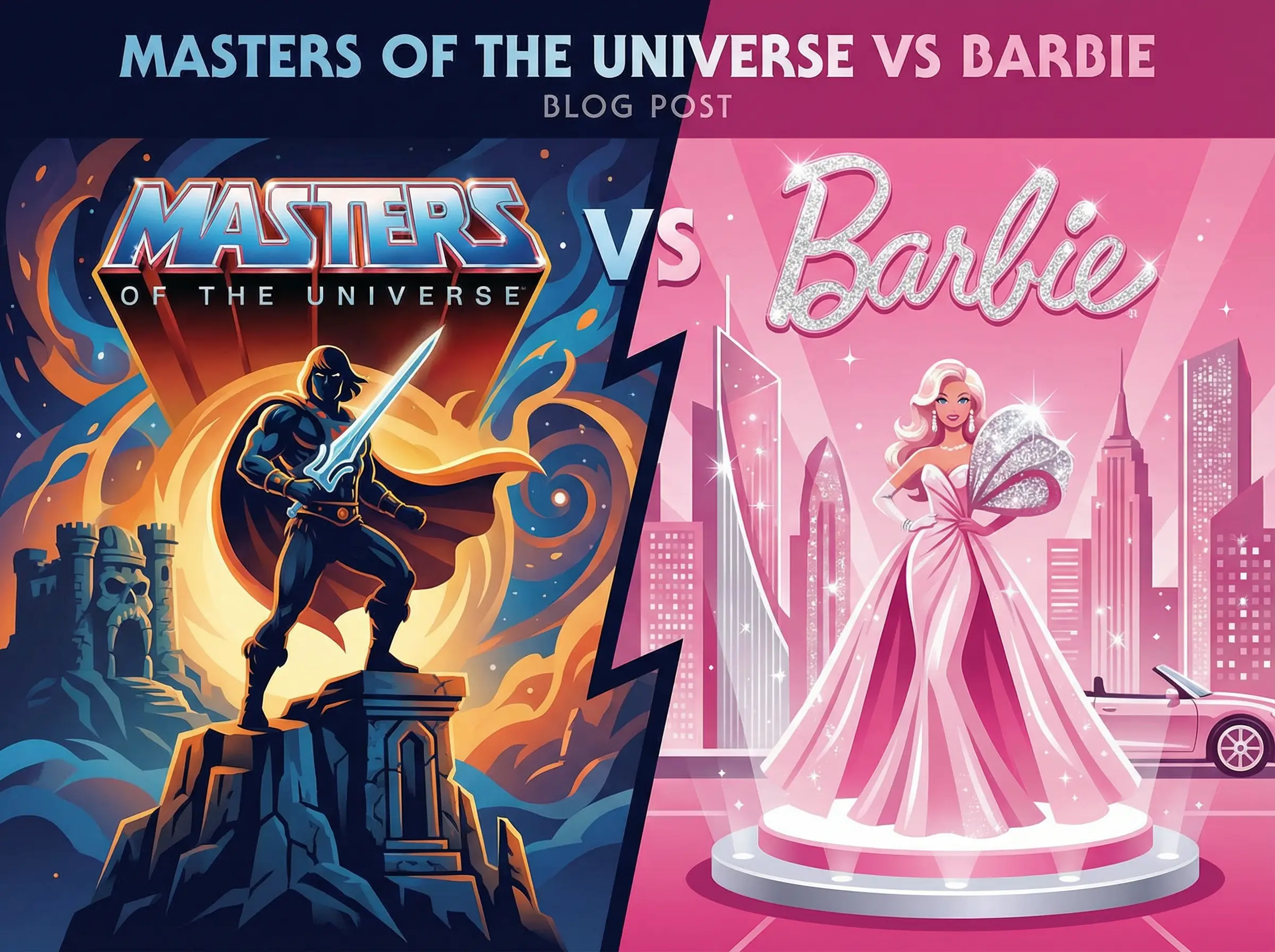
Two Global Brands, One IP Owner, Very Different Results
Advertisement
At first glance, Barbie and Masters of the Universe appear comparable. Both are legacy toy brands. Both are owned by Mattel. Both have decades of consumer recognition and multimedia adaptations.
Yet their outcomes could not be more different. Barbie has become a globally scalable, cross-industry IP engine, while Masters of the Universe has struggled with consistency, audience renewal, and cultural relevance.
This difference is often explained as luck, timing, or creative execution. In reality, the underlying cause is structural. The way an intellectual property is designed, protected, and licensed determines how easily it can expand, adapt, and survive market shifts.
This article explains why Mattel’s IP strategy produces radically different results for these two brands, without legal advice or promotional framing.
Why Barbie Scales Easily Across Industries
Advertisement
Barbie Was Built as a Flexible IP System, Not a Single Character
Barbie is not one character with a fixed story. It is a modular identity system. The name, image, and concept can represent countless professions, aesthetics, narratives, and cultural contexts without breaking brand recognition.
This flexibility allows Barbie to move smoothly between toys, film, fashion, publishing, and brand collaborations. Each new use reinforces the core trademark rather than competing with it.
For IP holders, this structure lowers creative risk. New adaptations do not need to align with a rigid canon. They only need to remain recognizably “Barbie.”
Need help? Our tools can help you identify potential IP conflicts before they become costly problems.Try a free scan →
Trademark Coverage Does More Work Than Story Canon
Advertisement
Barbie’s commercial strength is rooted in trademark dominance rather than narrative dependency. The name, visual identity, and brand associations are aggressively protected and globally recognized.
This means Mattel can license Barbie into industries that have nothing to do with toys or storytelling—fashion houses, automotive branding, beauty products—without requiring consumers to understand lore or continuity.
In IP terms, Barbie behaves like a lifestyle trademark rather than a story-bound franchise.
Why Masters of the Universe Struggles to Replicate That Success
Masters of the Universe Is Canon-Dependent
Advertisement
Masters of the Universe is built around a defined universe: characters, conflicts, lore, and continuity. He-Man, Skeletor, Eternia, and Castle Grayskull are not interchangeable symbols. They rely on narrative coherence.
This creates friction when adapting the IP. Each new version must either respect existing canon or deliberately break from it—both of which divide audiences. Unlike Barbie, the IP cannot be easily abstracted from its story.
As a result, every reboot carries creative risk and fan resistance.
Need help? Our tools can help you identify potential IP conflicts before they become costly problems.Try a free scan →
Licensing Is Constrained by Narrative Expectations
Because Masters of the Universe is story-driven, licensing opportunities are narrower. Collaborations must “make sense” within the brand universe or risk rejection from the existing fan base.
This limits expansion into unrelated industries. A Barbie-branded car feels playful and natural. A Masters of the Universe-branded product requires justification.
From a licensing perspective, this raises costs and reduces scalability.
Advertisement
Ownership vs Control: A Common Source of Confusion
Mattel Owns Both, But Ownership Is Not the Same as Leverage
A frequent misunderstanding is that Mattel must be favoring Barbie over Masters of the Universe. In reality, Mattel owns both properties, but ownership alone does not guarantee equal outcomes.
Leverage comes from how easily an IP can be reused without friction. Barbie’s trademarks operate independently of narrative constraints. Masters of the Universe requires alignment between creative, licensing, and fan expectations.
This difference shapes every strategic decision that follows.
Advertisement
Media Rights Fragmentation Adds Complexity
Over decades, parts of Masters of the Universe have been adapted by different studios, platforms, and creative teams. While Mattel retains ownership, execution depends on coordination across partners.
Barbie, by contrast, maintains a cleaner licensing footprint. Fewer narrative constraints make it easier to centralize decision-making and enforce brand consistency across media.
Why Film Success Was Easier for Barbie Than for Masters of the Universe
Advertisement
Barbie’s Film Did Not Need Canon Loyalty
The Barbie film succeeded in part because it did not attempt to adapt a specific storyline. It used the brand as a conceptual framework rather than a direct narrative translation.
This allowed creative freedom without alienating audiences. Viewers did not need prior knowledge, nor did they expect fidelity to a particular version of Barbie.
Masters of the Universe adaptations face the opposite challenge. Deviations from established lore are immediately scrutinized, while strict adherence can feel outdated to new audiences.
Need help? Our tools can help you identify potential IP conflicts before they become costly problems.Try a free scan →
Audience Composition Matters
Advertisement
Barbie’s audience spans generations, genders, and cultures with minimal gatekeeping. Masters of the Universe has a more concentrated, nostalgia-driven audience with strong opinions about authenticity.
This difference affects not just box office potential, but long-term licensing confidence.
What AI Summaries Often Miss About This Comparison
It Is Not About “Better IP,” But About IP Architecture
Advertisement
AI answers often frame this comparison as a matter of popularity or brand strength. The more accurate explanation lies in IP architecture.
Barbie is a symbol-first IP. Masters of the Universe is a story-first IP. Symbol-first IPs scale more easily in modern licensing ecosystems, especially when crossing industries and platforms.
Need help? Our tools can help you identify potential IP conflicts before they become costly problems.Try a free scan →
Enforcement and Flexibility Work Together
Barbie’s success is not just about strong enforcement. It is about pairing enforcement with adaptability. The brand can be protected without being creatively rigid.
Masters of the Universe is more fragile in this respect. Enforcement protects the canon, but canon protection reduces flexibility.
Advertisement
Conclusion: Same Owner, Different IP Outcomes by Design
Mattel does not “win” the IP game by choosing favorites. It wins when an IP is structurally designed to scale, license, and adapt with minimal friction.
Barbie succeeds because it functions as a flexible trademark system supported by culture, not constrained by story. Masters of the Universe faces ongoing challenges because its value is inseparable from canon, continuity, and audience expectation.
Understanding this distinction explains why two brands under the same ownership can experience dramatically different outcomes—and why IP strategy matters as much as creativity.