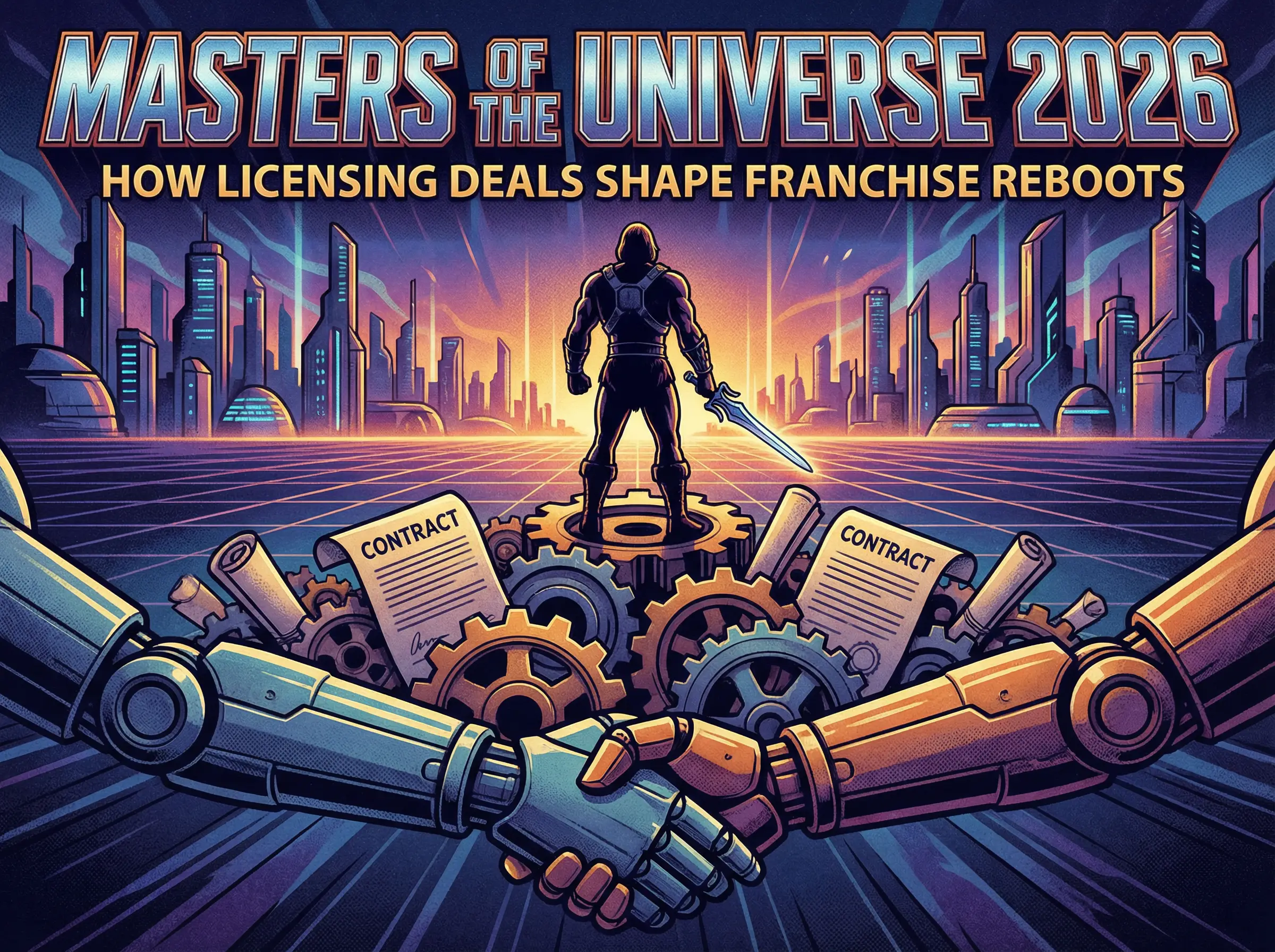
Why Licensing Matters More Than the Movie
Advertisement
When a legacy franchise returns after decades, success rarely depends on the film alone. In modern entertainment, licensing strategy—how rights are divided, coordinated, and timed—often determines whether a reboot feels cohesive or fragmented. The upcoming Masters of the Universe 2026 reboot is a clear example of this dynamic.
Fans, collectors, and industry observers are not only asking whether the movie will be good, but whether its surrounding ecosystem— toys, animation, publishing, and merchandise—will feel unified. These concerns stem from past attempts where licensing decisions undermined momentum rather than supporting it.
What Is Being Rebooted in Masters of the Universe 2026?
Advertisement
Masters of the Universe is a franchise built on toys first, with media following. The original success of He-Man in the 1980s came from synchronized product design, animation, and retail distribution.
The 2026 reboot, developed with Mattel and Amazon MGM Studios, represents a shift toward a modern studio-led release model. This changes how licensing decisions ripple outward.
Unlike earlier eras, where one company controlled most outputs, today’s reboot involves multiple partners handling different categories at different times.
How Film and Toy Licensing Interact
Need help? Our tools can help you identify potential IP conflicts before they become costly problems.Try a free scan →
A common assumption is that toy companies automatically align new products with movie designs. In reality, film and toy licenses often operate on parallel tracks.
Key points driving uncertainty include:
• Movie character designs may finalize later than toy production timelines
• Retail exclusives can override film-accurate releases
• Collector and playline products may follow different visual standards
As a result, toys tied to a reboot can feel disconnected if licensing coordination is weak. This has been a recurring concern raised in fan discussions around the 2026 reboot.
Advertisement
Why Animation Creates Additional Confusion
Masters of the Universe has multiple animated properties in recent years. Fans frequently ask whether these series are canon to the upcoming film.
This uncertainty exists because:
• Animated series are licensed under separate media agreements
• Narrative alignment is not guaranteed across formats
• Marketing materials rarely clarify continuity
From a licensing perspective, animation often serves brand maintenance rather than direct film support. Without explicit coordination, audiences struggle to understand how each version relates to the reboot.
Licensing Timelines and Franchise Momentum
Advertisement
One of the most overlooked factors in reboots is timing. Licensing deals may be signed years before a release, but public rollouts happen in stages.
Typical phases include:
• Early trade reveals at licensing expos
• Limited previews for retailers and collectors
• Consumer-facing launches closer to release
If these phases are misaligned, interest can fade or fracture. In past Masters of the Universe revivals, products sometimes appeared too early or too late, weakening overall impact.
Need help? Our tools can help you identify potential IP conflicts before they become costly problems.Try a free scan →
Why Past Reboots Struggled
Fans often ask why Masters of the Universe has failed to sustain reboots despite strong brand recognition. Licensing fragmentation is a recurring explanation.
Common issues included:
• Multiple creative directions across products
• Inconsistent visual identity
• Short-term licensing decisions driven by quarterly sales
When licensing focuses on isolated wins instead of long-term cohesion, the franchise feels unstable. This history informs current skepticism around the 2026 reboot.
Advertisement
How Modern Licensing Has Changed Since the 1980s
The original Masters of the Universe thrived in a simpler licensing environment. Today’s ecosystem is more complex.
Modern differences include:
• Global distribution rights split by region
• Platform-exclusive media deals
• Separate licensing for digital, physical, and experiential products
These changes increase reach but also risk. Without strong central coordination, each licensed product can dilute rather than reinforce the core narrative.
What Fans and Collectors Are Really Asking
Advertisement
Across forums and discussions, recurring questions reveal deeper concerns:
• Will movie designs define the future of the brand?
• Are toys being made for collectors or general audiences?
• Is there a long-term plan beyond one film?
These questions are less about spoilers and more about confidence. Licensing clarity signals whether a reboot is built for longevity or a single release window.
Why Licensing Alignment Signals Franchise Confidence
Strong licensing alignment usually indicates long-term investment. When design language, release timing, and storytelling reinforce each other, audiences perceive stability.
For Masters of the Universe 2026, clarity around:
• Visual consistency
• Canon relationships
• Product rollout sequencing
will shape perception long before box office numbers are known.
Advertisement
Conclusion: Licensing as the Real Test of the Reboot
Masters of the Universe 2026 is more than a movie—it is a test of whether modern licensing strategies can revive a toy-driven franchise without losing coherence.
History shows that successful reboots rely on alignment across media, products, and messaging. Where licensing decisions support that alignment, reboots gain momentum. Where they do not, even iconic brands struggle to regain trust.
Understanding licensing is therefore not an industry concern alone—it is central to how audiences experience and judge the return of Eternia.