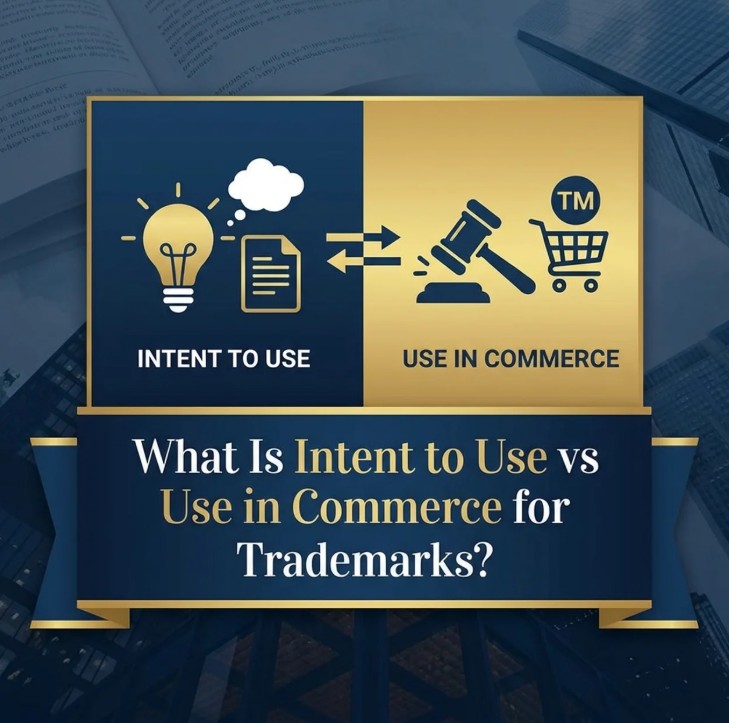
What Is Intent to Use vs. Use in Commerce for Trademarks?
Advertisement
When you file a trademark application with the USPTO, one of the first questions you'll face is simple but consequential: are you already using this trademark in your business, or are you planning to use it in the future?
Your answer determines which filing type you submit — and getting it wrong can waste months and hundreds of dollars. This guide breaks down both options in plain English so you can make the right call before you file.
Advertisement
The Two Filing Types: A Plain-English Summary
The USPTO requires all U.S. trademark applicants to declare a filing basis — the legal ground on which you're applying.
Need help? Our tools can help you identify potential IP conflicts before they become costly problems.Try a free scan →
There are two primary options for domestic applicants:
Advertisement
Section 1(a) — Use in Commerce: You are already using the trademark on your goods or services and selling across state lines (or online). You can file right now with proof of use.
Section 1(b) — Intent to Use (ITU): You are not yet using the trademark in commerce, but you have a genuine, good-faith plan to do so. You file now to reserve your priority date, then prove use later.
That's the core distinction. Everything else flows from this.
Advertisement
What Is "Use in Commerce" and What Counts?
Need help? Our tools can help you identify potential IP conflicts before they become costly problems.Try a free scan →
"Use in commerce" has a specific legal definition under U.S. trademark law. It does not simply mean your business exists, or that you've mentioned your brand online. It means your trademark is actively attached to goods or services that are being sold or transported across state lines — or made available nationally online.
For goods (physical products):
Advertisement
- The trademark must appear on the product itself, its packaging, its tag, or its label
- The product must have actually been sold or shipped to customers — not just advertised or listed
- A single sale to a friend or a staged transaction to "qualify" does not count — the USPTO requires genuine, bona fide commercial use
For services (online tools, software, consulting, etc.):
- The trademark must be visible in advertising, on your website, or in promotional materials
- The service must be genuinely available and actively rendered to customers — not just described or announced
- A website advertising your services counts if the services are real and accessible
Advertisement
Does selling online count?
Yes. Online sales are inherently interstate because your customers can be anywhere in the country. A brand selling products via its website, Etsy, or Amazon — and shipping to customers in different states — meets the use in commerce requirement. Posting about your brand on Instagram alone, without actual sales or rendered services, does not.
What Is Intent to Use (ITU) and How Does It Work?
Advertisement
An Intent to Use application — filed under Section 1(b) — lets you apply for a trademark before your business is live. You are declaring to the USPTO that you have a genuine intention to use this mark in commerce in the near future.
This is specifically designed for founders, creators, and businesses that:
Need help? Our tools can help you identify potential IP conflicts before they become costly problems.Try a free scan →
- Have chosen a brand name but haven't launched yet
- Are in product development and want to lock in protection early
- Are concerned a competitor might file for the same mark before they launch
Advertisement
What "bona fide intent" actually means
The USPTO takes this seriously. You cannot file an ITU application as a placeholder or to squat on a name you have no real plans to use. "Bona fide intent" means you have concrete, documented plans — a business plan, development mockups, a registered domain, prototype work, or other tangible evidence that launch is genuinely in progress.
Third parties can challenge your ITU application if your intent appears fabricated. Keeping documentation of your pre-launch activities is a practical safeguard.
Advertisement
The Single Biggest Reason to File ITU Early: Your Priority Date
Need help? Our tools can help you identify potential IP conflicts before they become costly problems.Try a free scan →
Here is the most important concept this article can give you — and it's the one most guides bury:
When you file an ITU application, your filing date becomes your legal priority date.
Advertisement
This is called constructive use. It means that even though you haven't started selling yet, you are legally treated as if you began using the mark on the day you filed. If someone else files for the same or a similar mark the day after you — even if they're already selling — your earlier filing date gives you priority in a dispute.
For founders who are pre-launch, this is the core strategic argument for filing ITU as early as possible. You plant your flag before you enter the market. Every day you delay is a day a competitor could file first.
Step-by-Step: What Happens After You File an ITU Application
Advertisement
Filing ITU is just the beginning. Here's the full process you need to understand before you commit.
Step 1: USPTO examines your application
Just like a use-based application, your ITU filing goes through examination — it's reviewed for conflicts with existing marks, distinctiveness, and compliance. This typically takes several months.
Advertisement
Step 2: Publication for opposition
If approved, the mark is published in the USPTO's Official Gazette for 30 days. Anyone who believes your mark conflicts with theirs can file an opposition.
Need help? Our tools can help you identify potential IP conflicts before they become costly problems.Try a free scan →
Step 3: Notice of Allowance (NOA) is issued
Advertisement
If no opposition succeeds, the USPTO issues a Notice of Allowance. This is not registration — it is conditional approval. Think of it as the USPTO saying: "We're ready to register this mark as soon as you prove you're using it."
The NOA triggers a strict deadline.
Step 4: File a Statement of Use — or request an extension
Advertisement
You now have 6 months from the NOA issue date to either:
Need help? Our tools can help you identify potential IP conflicts before they become costly problems.Try a free scan →
- File a Statement of Use (SOU): a sworn declaration that you are now actively using the mark in commerce, accompanied by a specimen showing real-world use
- OR file a Request for Extension of Time: if you need more time, you can request a 6-month extension — up to 5 times, for a maximum of 36 months total after the NOA
If you miss the deadline and don't file either, your application is abandoned. Your priority date is lost. The filing fees are not refunded.
Advertisement
Step 5: Statement of Use is reviewed and trademark registers
Once you file a valid SOU with an acceptable specimen, the USPTO reviews it. If approved, your trademark is officially registered.
What Is a Specimen — and Why Do So Many Get Rejected?
Advertisement
A specimen is real-world evidence showing your trademark in actual commercial use. It is not a mock-up, a rendering, or a logo file. It must show your mark as consumers actually encounter it when buying from you.
For goods:
- A photo of the product with the trademark on the label, tag, or packaging
- A screenshot of your online store product page showing the mark, a price, and a way to buy
Advertisement
For services:
- A screenshot of your website showing the trademark and describing the services being offered
- An advertisement or brochure used in the sale or promotion of your services
Need help? Our tools can help you identify potential IP conflicts before they become costly problems.Try a free scan →
What gets rejected:
Advertisement
- Mock-ups or prototype images (not real goods in commerce)
- A logo image file on its own
- A webpage that advertises a product but has no purchasing option
- Press releases or internal documents
- Social media posts that show the brand but don't demonstrate a transaction
Specimen rejection after filing a Statement of Use is one of the most common — and most preventable — failure points in the ITU process.
When to File as Use in Commerce vs. Intent to Use
Advertisement
File as Use in Commerce (Section 1(a)) when:
Need help? Our tools can help you identify potential IP conflicts before they become costly problems.Try a free scan →
- Your product is already being sold and shipped to customers
- Your service is live and actively available to paying customers
- You have a clear, acceptable specimen ready to submit
File as Intent to Use (Section 1(b)) when:
Advertisement
- You have a brand name chosen but your business hasn't launched
- You're in development and want to lock in your priority date now
- You're concerned about a competitor filing before you're ready
- You want to test trademark eligibility before committing to the name publicly
What to Avoid
Don't file as Use in Commerce if you haven't actually started selling. Submitting false dates of first use is a fraud claim risk and can invalidate your registration entirely.
Advertisement
Don't file ITU without genuine intent. Vague or unsupported claims of intent can be challenged. Keep documentation of your pre-launch activities.
Don't confuse the Notice of Allowance with registration. The NOA is not your registration certificate. You still need to file a Statement of Use with a real specimen.
Don't mix up Allegation of Use and Statement of Use. An Allegation of Use (technically called an Amendment to Allege Use) is filed before the NOA is issued. A Statement of Use is filed after the NOA. They serve the same function — proving use — but are filed at different points in the process.
Advertisement
Don't miss the Statement of Use deadline. Six months goes faster than founders expect, especially during a launch phase. Set a calendar reminder the day your NOA arrives. Extensions cost money ($125 per class per extension) and must be filed before each deadline expires.
Don't rely on token sales to qualify for use in commerce. Making one staged transaction, selling to a friend, or processing a single order does not constitute bona fide use in the ordinary course of trade.
Need help? Our tools can help you identify potential IP conflicts before they become costly problems.Try a free scan →
Next Steps
Advertisement
Before you file either type of application, run a thorough trademark search IPRightsHub Trademark Name Search to confirm your chosen name or brand isn't already registered or in use. A conflict found during examination will result in rejection — wasting both the filing fee and your time.
If your search comes back clean:
- Already selling? File a Section 1(a) use in commerce application with a real specimen ready.
- Pre-launch? File a Section 1(b) ITU application to lock in your priority date now. Build your documentation of intent, and track your NOA deadline closely once it arrives.
- Unsure which applies? The deciding question is simple: have you made a real sale or rendered a real service under this mark to a customer outside your own circle? If yes — 1(a). If no — 1(b).
Advertisement
Understanding the distinction between these two filing types is one of the most valuable things a founder can know before entering the trademark process. It directly affects your legal priority, your timeline, and your costs — and it's entirely within reach to get right without an attorney.