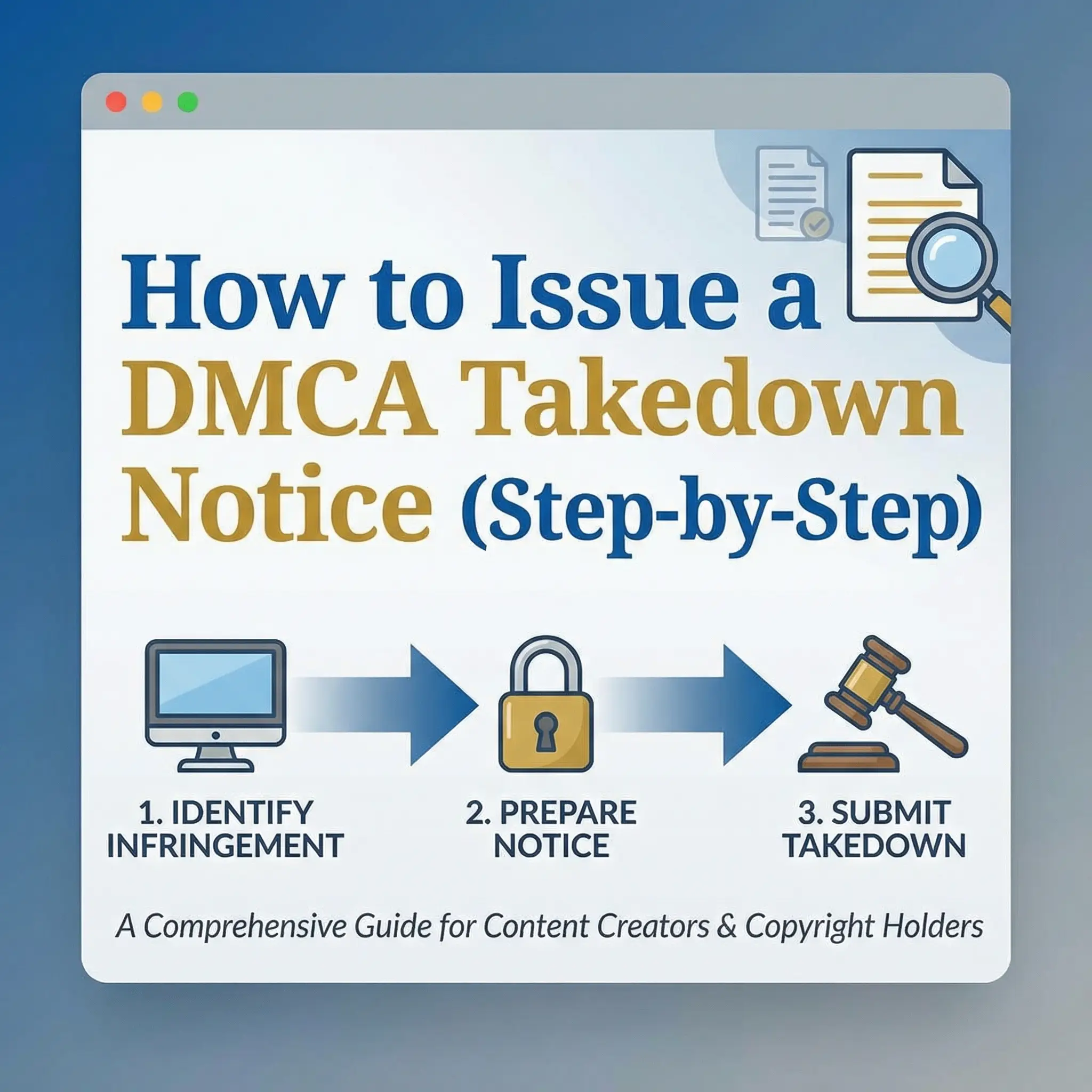
Understanding the DMCA Takedown Process
Advertisement
The Digital Millennium Copyright Act (DMCA) provides a mechanism for copyright owners to request the removal of infringing material from online platforms. Service providers like websites, social media sites, hosting companies, and search engines can avoid liability by promptly removing or disabling access to claimed infringing content upon receiving a proper notice.
This "notice-and-takedown" system is designed to balance protection of copyrighted works with free speech and due process. As a creator—photographer, writer, musician, artist, or content maker—knowing how to use this tool helps safeguard your original work without needing to file a lawsuit first.
The process works best when your notice meets strict legal requirements under 17 U.S.C. § 512(c)(3). Missing elements can cause the provider to ignore or reject your request.
When Should You Consider a DMCA Takedown Notice?
Advertisement
Use a DMCA notice when you discover unauthorized copies, reproductions, distributions, or displays of your copyrighted material online. Common scenarios for creators include:
• Someone reposting your Instagram photos on their blog without credit or permission.
• A YouTube channel uploading your music track as background audio.
• An e-commerce site selling prints of your digital artwork.
Before proceeding, confirm the use doesn't qualify as fair use, public domain material, or licensed content. Many creators hesitate because they worry about overreach or retaliation—valid concerns—but a properly drafted notice focuses strictly on copyright infringement.
Step 1: Document the Infringement Thoroughly
Need help? Our tools can help you identify potential IP conflicts before they become costly problems.Try a free scan →
Start by gathering clear evidence. Take dated screenshots of the infringing page showing the content in context. Note the exact URLs where the material appears.
Collect proof of your ownership: original files with creation timestamps, publication dates, registration certificates if applicable, or links to where you first posted or sold the work.
This documentation strengthens your position and helps if the matter escalates.
Advertisement
Step 2: Identify the Correct Recipient (Designated Agent)
Send your notice to the online service provider's designated DMCA agent—not directly to the infringer. Most major platforms (YouTube, Instagram, Twitter/X, GitHub, Shopify hosts) maintain public directories.
Use the U.S. Copyright Office's DMCA Designated Agent Directory to search by company name. Many providers also list their agent email or form in their footer, help center, or "Legal" page.
For example:
• Social media platforms often have online submission forms.
• Web hosts require notices to their abuse or copyright email.
Targeting the wrong party delays removal.
Step 3: Draft a Compliant DMCA Takedown Notice
Advertisement
A valid notice must include these required elements (from 17 U.S.C. § 512(c)(3)(A)):
• Your physical or electronic signature (typed name often suffices for electronic notices).
• Identification of the copyrighted work(s) claimed to be infringed (e.g., "My original photograph titled 'Sunset Over Mountains' published on my site at [URL]").
• Identification of the infringing material with enough detail for the provider to locate it (direct URLs are best; describe if needed).
• Your contact information (name, address, phone, email) so the provider or user can reach you.
• A statement of good faith belief that the use is not authorized by the copyright owner, its agent, or the law.
• A statement, under penalty of perjury, that the information in the notice is accurate and that you are authorized to act on behalf of the copyright owner.
Many creators add a brief explanation of why the use infringes, but keep it factual and concise.
Common pitfalls include vague descriptions, missing the perjury statement, or sending without ownership verification—these lead to rejections or delays.
Need help? Our tools can help you identify potential IP conflicts before they become costly problems.Try a free scan →
Step 4: Submit the Notice and Follow Up
Send via the provider's preferred method—email, online form, or certified mail if specified. Keep records of submission (screenshots, sent receipts).
Providers must act "expeditiously" upon a valid notice—often within days. You'll typically receive confirmation, and the content should be removed or disabled.
The alleged infringer may file a counter-notice, restoring the material after 10–14 business days unless you pursue legal action (e.g., file a lawsuit). Most cases resolve without escalation.
Advertisement
What Happens After Submission?
• Removal: The provider disables access to the material to maintain safe harbor protection.
• Counter-Notification: The user can challenge the takedown with their own sworn statement.
• Your Options: If countered, decide whether to file a restraining order or lawsuit within the window.
Monitor for re-uploads and consider watermarking or registration for stronger enforcement.
Alternatives and Best Practices Before Filing
Advertisement
Many creators first try polite outreach to the infringer or site admin—often resolves issues faster without formalities.
Registering your copyright with the U.S. Copyright Office strengthens remedies (statutory damages, attorney fees) and isn't required but recommended for proactive protection.
Avoid using DMCA for non-copyright issues like criticism, competition, or fair use disputes—misuse can lead to liability under Section 512(f).
Tools to Help Protect and Enforce Your Rights
Streamline detection and response with built-in features:
• Run a quick scan for unauthorized uses of your content across platforms using our IP-SAM™ Scanner.
• Check copyright status or prepare registrations via our Copyright Registration Assistant.
• Monitor brand mentions and potential infringements with our Trademark & IP Monitoring Dashboard.
These tools help creators stay ahead without constant manual searching.
Advertisement
Final Thoughts on Using DMCA Effectively
Issuing a DMCA takedown notice empowers you to protect your creative work in the digital space. By following these steps carefully—documenting evidence, targeting the right agent, and crafting a complete notice—you increase the chances of swift removal while minimizing risks.
The process rewards precision and good faith. When done right, it removes barriers to your audience enjoying your authentic creations.
Ready to check for potential infringements or strengthen your IP strategy? Start with a free scan using IP-SAM™ today.