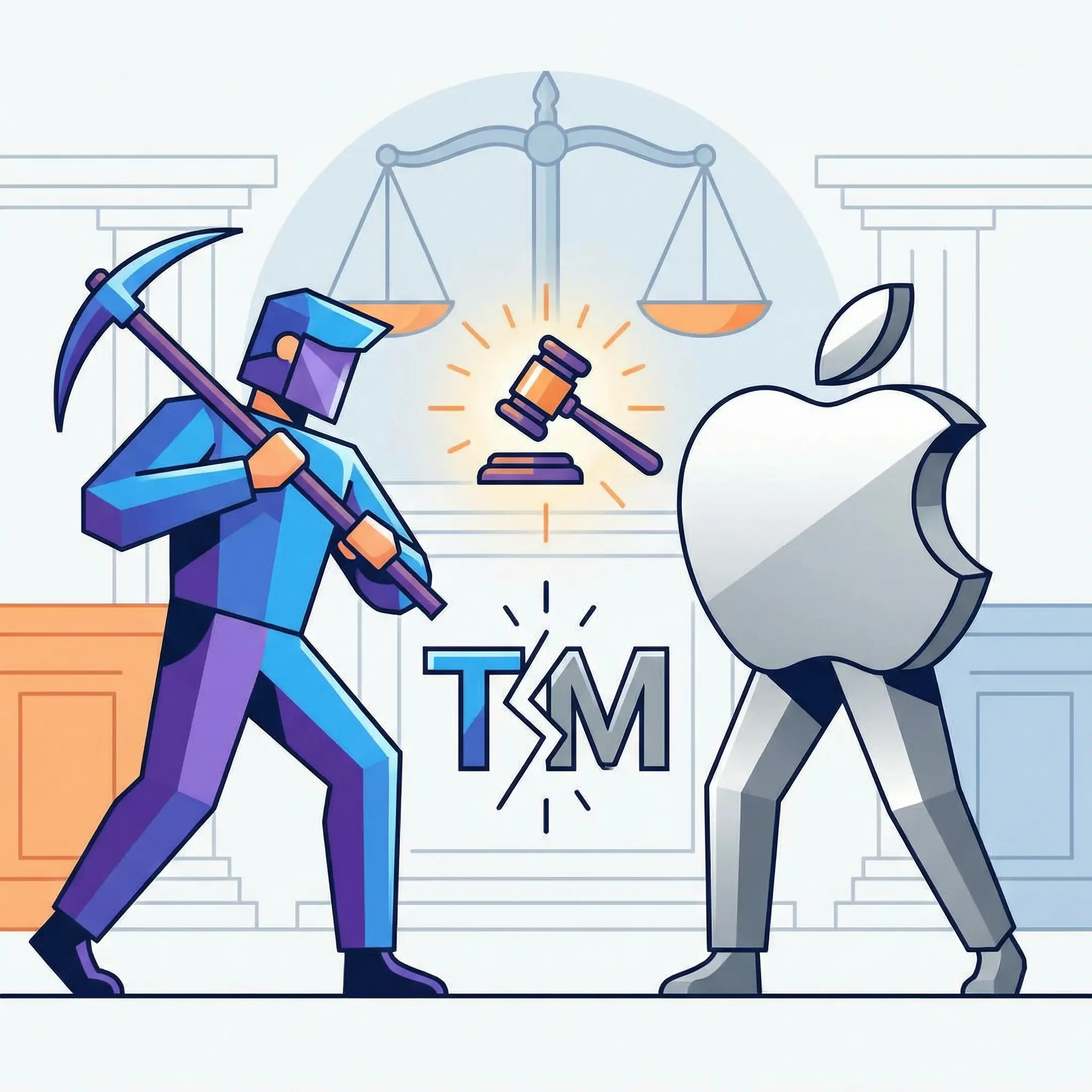
The Confusion: Two Separate Disputes
Advertisement
When people search "Fortnite vs Apple," most results focus on Epic Games' 2020 antitrust lawsuit over App Store payment policies. But there's a lesser-known trademark dimension that app developers and game studios need to understand: whether "Fortnite" as a brand name conflicted with any Apple trademarks, and what that reveals about app name protection.
The reality is more nuanced than a simple "Apple sued Epic over the name" narrative. This case analysis separates fact from speculation, examines actual trademark filings, and extracts practical lessons for founders naming their apps.
Advertisement
Background: Epic's Fortnite Trademark Journey
Epic Games filed its first U.S. trademark application for "FORTNITE" on June 9, 2011 (Serial No. 85344818) under Class 9 for "computer game software" and Class 41 for "entertainment services." This was years before Fortnite Battle Royale became a cultural phenomenon in 2017.
Need help? Our tools can help you identify potential IP conflicts before they become costly problems.Try a free scan →
The trademark registration was granted on January 13, 2015 (Registration No. 4670611), giving Epic legal presumption of nationwide rights to use "FORTNITE" for video games and related entertainment services.
Advertisement
Apple, meanwhile, has thousands of active trademarks covering product names, service marks, and design elements across multiple international classes. None of Apple's registered trademarks use the word "Fortnite" or anything phonetically similar.
The Alleged Dispute: What Actually Happened
Here's where myth and reality diverge. There was no formal trademark infringement lawsuit filed by Apple against Epic Games over the "Fortnite" name. No USPTO opposition proceedings appear in public records challenging Epic's FORTNITE trademark.
Advertisement
The confusion stems from three factors:
Need help? Our tools can help you identify potential IP conflicts before they become costly problems.Try a free scan →
1. The 2020 App Store Lawsuit: Epic's high-profile antitrust case against Apple over payment processing dominated headlines and led many to assume all Epic-Apple conflicts were part of one case.
2. Speculation During Launch: When Fortnite Mobile launched on iOS in 2018, some media outlets speculated whether Apple might have trademark concerns, but no evidence suggests Apple raised objections.
Advertisement
3. Trademark Class Misunderstanding: Because Apple doesn't make video games, and Epic doesn't manufacture smartphones, their trademark classes don't overlap in ways that typically trigger "likelihood of confusion" under U.S. trademark law.
Key Issues: How App Name Trademarks Actually Work
This case—or rather, the lack of a case—illustrates critical principles about app name protection:
Advertisement
Trademark Classes Matter
U.S. trademarks are registered within specific international classes. Epic's FORTNITE mark covers:
- Class 9: Computer game software, downloadable game software
- Class 41: Entertainment services, namely providing online video games
Advertisement
Apple's core trademarks cover:
- Class 9: Computers, smartphones, tablets, operating system software
- Class 42: Computer services, cloud computing
- Multiple others: Retail services, audio equipment, etc.
Need help? Our tools can help you identify potential IP conflicts before they become costly problems.Try a free scan →
The Trademark Office examines whether consumers would likely be confused about the source of goods or services. A video game called "Fortnite" and a hypothetical Apple product called "Fortnite" would need to operate in overlapping markets for confusion to arise.
Advertisement
Coexistence Is Common
Delta Air Lines and Delta Faucets coexist without trademark conflict. Apple (computers) and Apple Corps (The Beatles' record label) fought for years but eventually coexisted with negotiated boundaries.
The principle: if products serve different markets and consumers wouldn't reasonably confuse the source, similar or identical names can legally coexist.
Advertisement
First Use vs. First to File
Need help? Our tools can help you identify potential IP conflicts before they become costly problems.Try a free scan →
Epic filed its FORTNITE trademark in 2011 and launched the original Fortnite game in 2017. Even if Apple wanted to use "Fortnite" for a future product, Epic's earlier registration in gaming-related classes would create legal barriers—but only if Apple's use would create consumer confusion.
Outcome: No Conflict on Record
Advertisement
Based on publicly available USPTO records and court filings, there is no documented trademark dispute between Apple and Epic Games over the "Fortnite" name.
Epic maintains active, registered trademark protection for FORTNITE across multiple classes. Apple has never filed opposition proceedings or infringement claims related to this mark.
The 2020-2021 Epic v. Apple lawsuit focused entirely on App Store commission policies and developer payment options—not branding or trademark rights.
Advertisement
Lessons for App Developers and Founders
1. Separate App Store Rejection from Trademark Issues
Apple's App Store review process can reject apps for name-related reasons, but this is different from trademark infringement. Reasons for rejection include:
Advertisement
- Impersonating another app
- Using another company's trademarked name without permission
- Violating App Store naming guidelines
These are policy violations, not legal trademark disputes. If Apple rejects your app name, it doesn't automatically mean you're infringing someone's trademark—it may just violate store policies.
Need help? Our tools can help you identify potential IP conflicts before they become costly problems.Try a free scan →
2. File Your Trademark Early
Advertisement
Epic filed FORTNITE in 2011, six years before Battle Royale launched. Early filing establishes "constructive use" priority, giving you nationwide rights even before commercial launch.
For app developers, this means: trademark your core brand name as early as feasible, ideally before significant marketing spend or public launch.
3. Check Trademark Classes, Not Just Names
Advertisement
Two apps can have identical names if they operate in sufficiently different categories. Use the USPTO's Trademark Electronic Search System (TESS) to check not just name matches, but the international classes those marks are registered under.
Need help? Our tools can help you identify potential IP conflicts before they become costly problems.Try a free scan →
Ask: "Would consumers think my app and the existing trademark come from the same source?"
4. Don't Assume Big Company = Automatic Win
Advertisement
Epic, while large, was still challenging one of the world's most valuable companies. Trademark rights aren't determined by company size—they're determined by who filed first in relevant classes, who used the mark first in commerce, and whether confusion is likely.
Smaller developers with earlier filing dates and clear use in distinct categories can successfully defend their names against larger companies.
5. Document Everything
Advertisement
Epic's 2011 filing and clear use history in gaming protected them. If you're building an app:
- File your trademark application early
- Maintain records of first use in commerce
- Document your brand development timeline
- Keep evidence of your market positioning
What This Means for Founders
Advertisement
If you're naming an app or game:
Before Launch:
Need help? Our tools can help you identify potential IP conflicts before they become costly problems.Try a free scan →
- Run a comprehensive USPTO trademark search
- Check not just exact matches, but phonetically similar names
- Review the international classes of existing marks
- Consider hiring a trademark attorney for clearance if your brand will carry significant value
Advertisement
If You Find a Conflict:
- Don't panic—evaluate whether the classes overlap
- Assess likelihood of confusion realistically
- Consider reaching out to the mark holder for coexistence agreements
- In some cases, operating in clearly different markets eliminates risk
After Launch:
Advertisement
- Monitor trademark databases for new filings that might conflict
- File your own application to secure your rights
- Respond promptly to any cease-and-desist letters with legal counsel
- Don't ignore trademark issues hoping they'll disappear
Need help? Our tools can help you identify potential IP conflicts before they become costly problems.Try a free scan →
How IP-SAM™ Detects This Risk
IPRightsHub's IP-SAM™ (Systemized Agentic Monitoring) technology is designed to flag exactly these kinds of conflicts before they become legal problems.
Advertisement
For the Fortnite scenario, IP-SAM would:
- Cross-reference "FORTNITE" against all active USPTO trademarks
- Identify trademark class overlaps (or lack thereof)
- Analyze phonetic and visual similarity scores
- Flag potential conflicts with weighted risk ratings
- Monitor new trademark filings that could create future conflicts
For app developers, this means:
Advertisement
- Automated checks during naming phase, before brand investment
- Ongoing monitoring after launch to detect new trademark filings in your space
- Risk scoring that accounts for trademark classes, not just name matches
- Early warning system for potential disputes before cease-and-desist letters arrive
Traditional trademark searches require manual USPTO database queries and legal interpretation. IP-SAM automates similarity detection across names, logos, app icons, and domain names—providing founders with trademark intelligence without requiring legal expertise for initial screening.
The Fortnite-Apple case that never was demonstrates why automated, class-aware trademark monitoring matters: not every name similarity creates legal risk, but knowing which ones do requires systematic analysis of registration data, international classes, and likelihood of confusion factors.