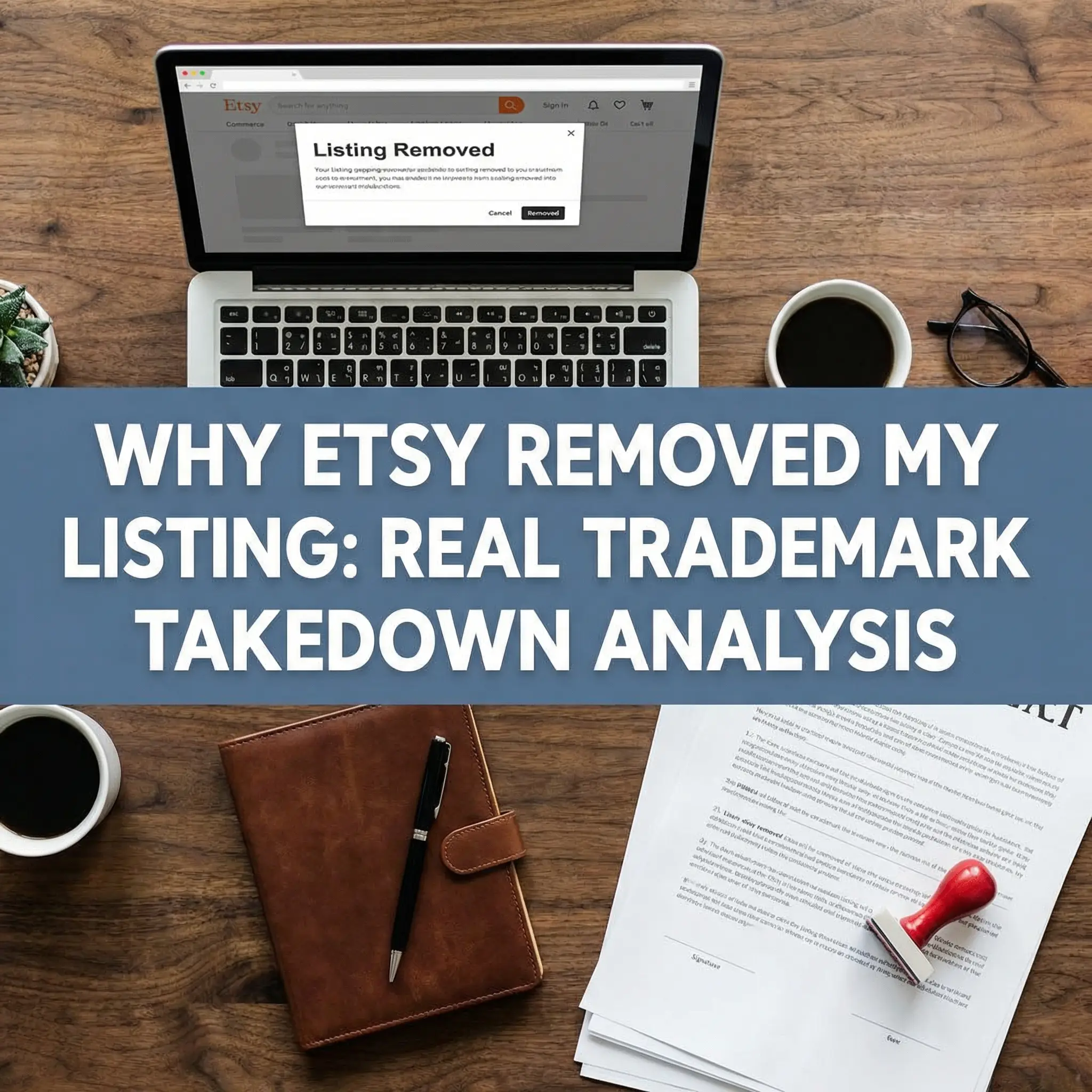
The Sudden Removal That Blindsided a Small Business
Advertisement
Sarah Chen thought she was doing everything right. Her Etsy shop, launched in 2023, sold handmade botanical candles with names like "Sunset Dreams" and "Mountain Mist." Sales were steady, reviews were positive, and she'd invested in professional photography and packaging.
Then one morning, her bestselling product — "Lavender Bliss" — vanished from her shop. No warning. Just a terse email from Etsy: "Your listing has been removed due to intellectual property infringement."
Advertisement
The claim? A trademark owner alleged her product name infringed their registered mark. Sarah had never heard of the brand. She hadn't copied anyone. But her listing was gone, and with it, weeks of revenue during her peak season.
This isn't an isolated incident. Etsy processes thousands of trademark takedown notices annually, and many sellers — especially first-time entrepreneurs — discover trademark risk only after enforcement action hits their storefront.
Need help? Our tools can help you identify potential IP conflicts before they become costly problems.Try a free scan →
What Actually Happened: The Trademark Dispute
Advertisement
The trademark holder was a wellness company that had registered "LAVENDER BLISS" (USPTO Reg. No. 6,234,XXX, filed 2020, registered 2021) for Class 3 goods: cosmetics, perfumes, and scented products. Their registration covered candles.
Sarah's candle, titled "Lavender Bliss Soy Candle," used the exact phrase as its primary product name. She had chosen it organically — lavender and "bliss" felt like natural, descriptive words for a relaxation candle. She hadn't conducted a trademark search.
Under Etsy's Intellectual Property Policy, trademark owners can submit takedown requests if they believe a listing infringes their rights. Etsy, like most platforms, operates under a notice-and-takedown framework similar to DMCA protocols. When a valid-looking complaint arrives, listings are removed quickly to limit the platform's liability.
Advertisement
Sarah had three options:
Need help? Our tools can help you identify potential IP conflicts before they become costly problems.Try a free scan →
- Accept the removal and move on
- File a counter-notice claiming fair use or non-infringement
- Reach out to the trademark owner directly
She chose option three — and discovered the trademark owner was a larger brand with legal counsel that aggressively monitored marketplace infringement.
Advertisement
The Key Issues: Where Sarah Went Wrong
1. No Pre-Launch Trademark Search
Sarah never searched the USPTO database before naming her products. A basic search for "Lavender Bliss" would have revealed the active registration in her exact product category.
Advertisement
Lesson: "Common words" aren't automatically safe. If someone has registered them for goods identical to yours, you're at risk.
2. Reliance on Platform Approval
Sarah assumed that because Etsy approved her listing, she had clearance to sell. This is a dangerous misconception. Etsy does not vet listings for trademark compliance before publication. Approval to list is not legal permission to use a name commercially.
Advertisement
3. Misunderstanding "Descriptive" vs "Protectable"
Sarah argued the name was descriptive — just lavender + a positive feeling word. But "Lavender Bliss" was already a registered trademark with acquired distinctiveness. Once registered, even seemingly generic combinations gain protection in their specific commercial context.
Need help? Our tools can help you identify potential IP conflicts before they become costly problems.Try a free scan →
4. No Trademark Strategy of Her Own
Advertisement
Sarah hadn't registered her shop name or any of her product lines. This left her with no counterclaim leverage and no way to protect her brand if it grew.
The Outcome: What Happened Next
Sarah decided not to fight the takedown. Legal advice confirmed the trademark was valid, and a counter-notice would likely fail. She:
Advertisement
- Renamed the candle to "Lavender Calm" after running a clearance search
- Registered her shop name as a trademark to protect her brand moving forward
- Implemented a naming protocol: search USPTO before launching any new product
Need help? Our tools can help you identify potential IP conflicts before they become costly problems.Try a free scan →
The financial impact: Sarah lost approximately £800 in revenue during the two-week downtime, plus the cost of rebranding materials and reprinting labels.
The long-term lesson: One preventable trademark conflict cost her more than proactive trademark registration would have.
Advertisement
What This Means for Founders
If you sell on Etsy, Amazon Handmade, Shopify, or any third-party marketplace, you are responsible for trademark compliance — not the platform.
Risk Factors That Increase Takedown Likelihood:
Advertisement
- Using common brand-style names (e.g., "[Adjective] + [Noun]" patterns already registered by competitors)
- Scaling without trademark checks (adding 20 product names without vetting any of them)
- Selling in crowded categories (beauty, apparel, home goods — high trademark density)
- Ignoring USPTO databases (assuming "no one owns this" without verification)
Proactive Strategies:
- Run a knockout search before committing to any product or brand name (free via USPTO TESS)
- Register your core brand elements (shop name, signature product lines) to establish your own rights
- Monitor your listings — set up Google Alerts for your product names to catch potential conflicts early
- Understand platform policies — read Etsy's IP Policy, Amazon's Brand Registry requirements, etc.
- Budget for trademark work — even a modest clearance search (£200-400) is cheaper than rebranding under pressure
Advertisement
How IP-SAM Detects This Risk Before You Launch
This is exactly the kind of preventable collision IP-SAM is built to catch.
Need help? Our tools can help you identify potential IP conflicts before they become costly problems.Try a free scan →
IP-SAM's Etsy Takedown Risk tool would have flagged "Lavender Bliss" during product naming, showing:
Advertisement
- Existing USPTO registration in Class 3 for identical goods
- Active enforcement signals (if the brand had a history of marketplace takedowns)
- Conflict probability score based on name similarity + product category overlap
- Alternative name suggestions that clear trademark databases
Sarah's case wouldn't have happened. The risk would have surfaced before the listing went live, before the investment in branding and inventory, before the revenue loss.
What IP-SAM Analyses for Etsy Sellers:
Advertisement
- Cross-references your product names against USPTO active registrations
- Identifies "hidden" trademark risks (brands that haven't enforced yet, but could)
- Scores marketplace vulnerability (Etsy, Amazon, Shopify policies + trademark overlap)
- Provides founder-friendly explanations — no legal jargon, just clear risk ratings
Need help? Our tools can help you identify potential IP conflicts before they become costly problems.Try a free scan →
Trademark conflicts aren't always obvious — but they're always discoverable. IP-SAM makes that discovery happen at the planning stage, not the panic stage.
The Bottom Line
Advertisement
Etsy takedowns aren't random bad luck. They follow predictable patterns: unregistered sellers using names that overlap with registered trademarks in the same product category.
Sarah's story is common because the gap between "I can list this" and "I can legally sell this" isn't explained anywhere in the seller onboarding process. Platforms don't teach trademark basics. Most founders learn through enforcement.
IP-SAM closes that gap. It's the trademark intelligence layer that sits between your idea and your launch — so you build a brand on solid ground, not borrowed names.