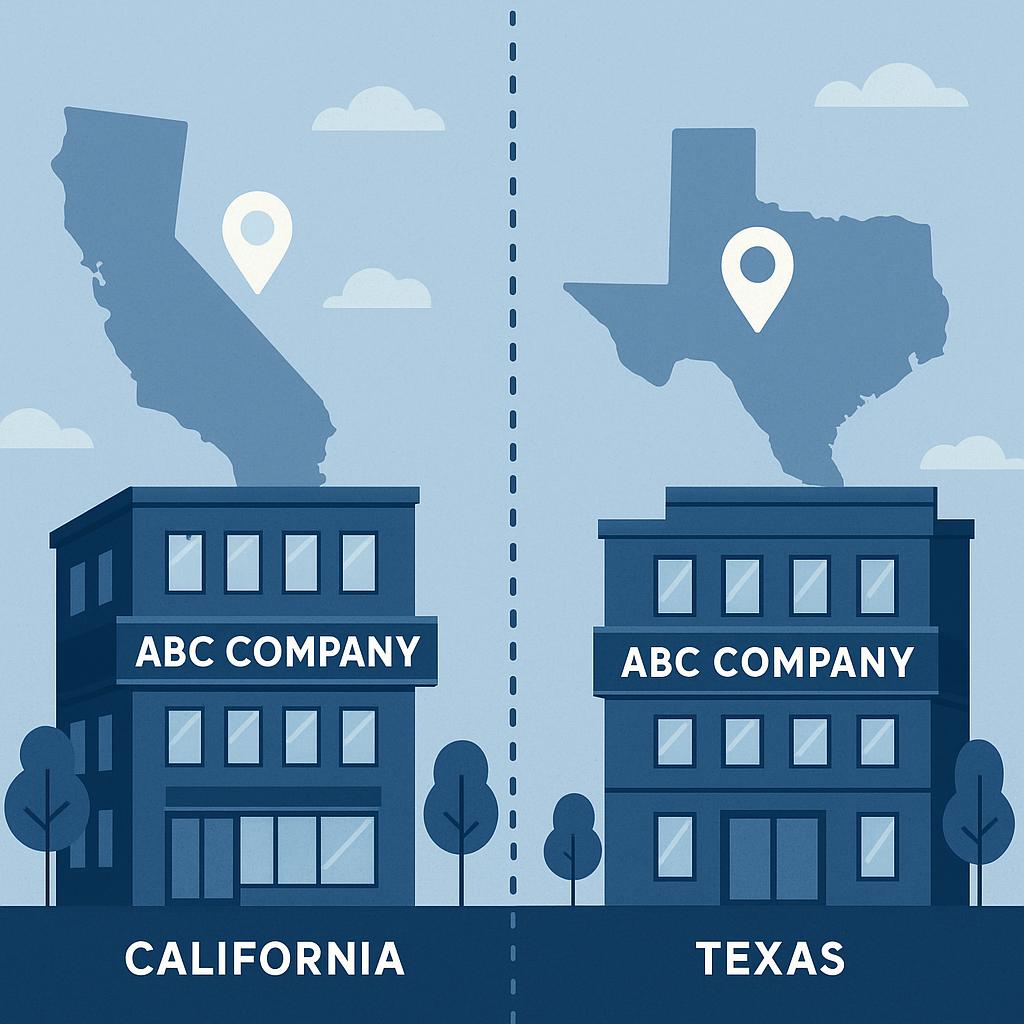
Can Two Businesses Have the Same Name in Different States?
Advertisement
The short answer is: sometimes yes, sometimes no — and the line between the two matters more than most founders realise.
When you register a business name with your state, that protection stops at the state border. It does not follow you into other states, and it does not protect you from a business in another state that is doing the same thing. Understanding this gap is one of the most important steps you can take before investing in a brand.
How Business Name Protection Actually Works
Advertisement
Business names in the US are protected at three different levels, and most people only know about one of them.
State registration means your LLC or corporation name is unique within that state's database. It prevents another registered entity in the same state from filing under the same name. Nothing more.
Need help? Our tools can help you identify potential IP conflicts before they become costly problems.Try a free scan →
Common law trademark rights arise the moment you start using a name in commerce — no filing required. These rights are real, but they are geographically limited to the area where you actually do business and are known. If a dispute goes to court, common law rights are harder to prove than a registered mark.
Advertisement
Federal trademark registration with the USPTO is the only form of protection that is nationwide from day one. Once registered, no one in any state — in any industry covered by the registration — can use a confusingly similar name.
Most small business owners stop at step one and assume they are covered. They are not.
When Two Businesses Can Legally Share a Name
Advertisement
Two businesses in different states can legally use the same name if all of the following are true:
Need help? Our tools can help you identify potential IP conflicts before they become costly problems.Try a free scan →
- Neither has federally registered the name as a trademark
- They operate in different industries with no realistic overlap
- Their customer bases do not overlap — especially online
- Neither is a major national brand (where confusion is presumed at scale)
For example, a plumbing company called "Blue Ridge Services" in Montana and a graphic design studio called "Blue Ridge Services" in Georgia can legally coexist. Their customers are different, their industries are different, and no one is likely to confuse them.
Advertisement
When Sharing a Name Becomes a Problem
The geography defence breaks down quickly in three situations.
Same industry, different states. If both businesses sell similar products or services, courts apply the consumer confusion test — would a reasonable customer mistake one business for the other? If yes, there is an infringement risk regardless of which state each is registered in.
Advertisement
One business has a federal trademark. A federally registered trademark is national on day one. If a competitor holds a federal trademark for a name you are using — even if you are in a completely different state — you can be forced to rebrand, pay damages, or both. State registration offers zero defence against a federal trademark.
Both businesses operate online. This is the gap that most existing guides miss entirely. The old geographic rule assumed that a plumber in Pennsylvania and a plumber in Ohio serve different customers. But if both businesses have websites, run national ads, or sell products that ship anywhere, their markets overlap completely. Courts have increasingly recognised this. The "different state" defence is significantly weaker — and sometimes worthless — for online businesses.
The First-to-Use vs. First-to-Register Question
Advertisement
This is where real disputes get complicated.
Under US trademark law, first to use the name in commerce generally has the stronger claim — not first to register. If you have been trading under a name for three years and someone else registers a federal trademark for the same name last month, you may still have superior rights in your geographic market.
However, the person with the federal registration has a nationwide presumption of ownership outside your established market. Courts will often let both parties continue using the name, but restrict the earlier user to their original territory and block expansion.
Need help? Our tools can help you identify potential IP conflicts before they become costly problems.Try a free scan →
The practical lesson: if you are the first user, register. If you do not register, your rights are real but limited and expensive to defend.
Advertisement
What the "Consumer Confusion Test" Actually Means
When two businesses dispute a name, courts and the USPTO do not just look at whether the names are identical. They assess the likelihood of consumer confusion using several factors:
- Are the businesses in the same or related industry?
- How similar are the names visually and phonetically?
- Do they serve the same type of customer?
- Are the channels of sale or marketing overlapping?
- Did one party know about the other before adopting the name?
Advertisement
Two businesses named "Apex Consulting" — one in HR, one in IT — might both clear the test. Two businesses named "Apex Consulting" both targeting startup founders would likely fail it, even in different states.
Need help? Our tools can help you identify potential IP conflicts before they become costly problems.Try a free scan →
What to Do If You Find a Conflict
Before you launch: Run a USPTO trademark search at tmsearch.uspto.gov first, not after. State registration searches only catch registered entities within a single state — they will not surface federal trademarks or common law users. Also search Google, social media, and domain registrars. A name that is "clear" on your Secretary of State's website may still be legally risky.
Advertisement
After you launch: If you discover another business using your name, the steps are: identify whether they hold a federal trademark, assess whether your industries and customers overlap, and consult a trademark attorney before sending or responding to any cease and desist letter. Many conflicts are resolved through coexistence agreements — written agreements that allow both parties to use the name with defined geographic or industry boundaries.
If they have a federal trademark you did not know about: This is the hardest situation. If the trademark is valid and covers your industry, you will likely need to rebrand. The cost of early rebranding is almost always lower than the cost of litigation.
When to Do Nothing
Advertisement
If the other business is in a clearly unrelated industry, operates only locally with no online presence, and holds no federal trademark, the legal risk to you is low. Many small businesses share names across states without ever having a conflict. The risk increases proportionally with how similar your businesses are and how large both of you grow.
What to Avoid
Do not rely on a Secretary of State name search as your only check. It covers one state's registered entities only. It will not find federal trademarks, common law users, or businesses in other states.
Advertisement
Do not assume "different state = no problem" if you sell online. The geographic defence is weakest for e-commerce, digital services, and any business with a national marketing presence.
Do not ignore a conflict and hope it goes away. If a conflict exists when you are small, it will still exist — and cost more — when you are large.
Need help? Our tools can help you identify potential IP conflicts before they become costly problems.Try a free scan →
Do not confuse registering a DBA with protecting a name. DBA names (also called trade names, fictitious names, or assumed names) have little to no exclusive protection in most states. A DBA search will not reveal every business using a name, and filing a DBA does not prevent others from using the same name.
Advertisement
Next Steps
To understand where you actually stand before committing to a name:
- Search the USPTO trademark database for your exact name and close variations
- Search your state's Secretary of State business database
- Run a Google search and check major social platforms and domain registrars
- If the name is clear across all three, consider filing a federal trademark application to lock in national protection before you grow
- If you find a conflict, assess industry overlap and geographic reach before deciding whether to proceed or pivot
Advertisement
The earlier you do this work, the less expensive any correction will be.
This article is for general informational purposes only and does not constitute legal advice. For guidance specific to your situation, consult a qualified trademark attorney.