Why App Name Conflicts Are So Common
Advertisement
Many founders discover naming issues at the worst possible moment: right before launch. An app is built, marketing assets are ready, and suddenly the preferred name is unavailable or questioned. At that point, developers often ask a simple question with a complicated answer: can two apps have the same name?
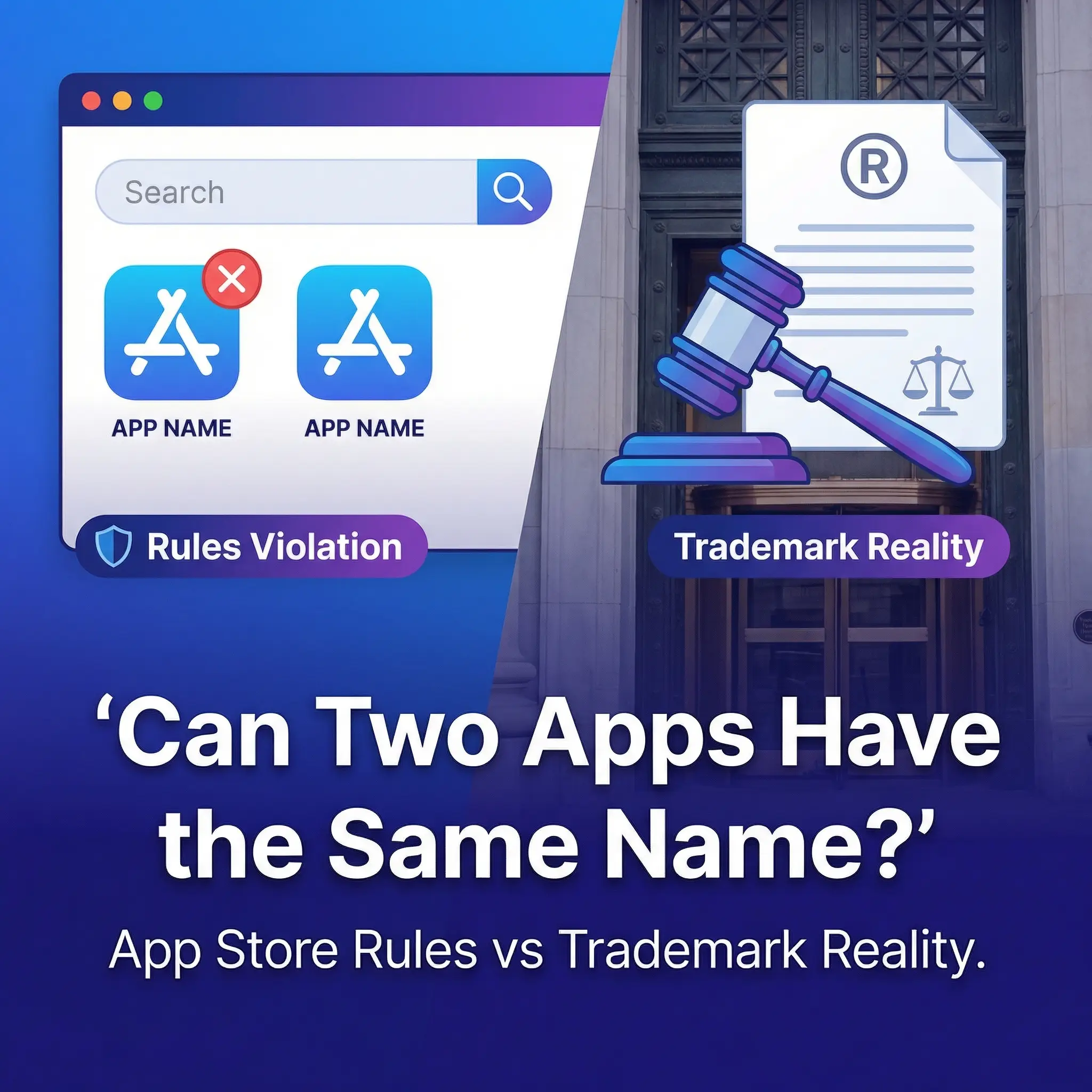
The confusion exists because app stores and trademark systems operate under different rules. App approval focuses on platform policies, while trademark rights relate to brand ownership and market use. Understanding the difference helps explain why two apps may share a name in some situations and face conflict in others.
Can Two Apps Have the Same Name in App Stores?
Advertisement
The short answer is that it depends on the platform. App stores apply their own naming rules, which are not designed to enforce trademark law.
App Store (Apple) naming rules
Need help? Our tools can help you identify potential IP conflicts before they become costly problems.Try a free scan →
Apple generally requires app names to be unique within its store. Exact duplicates are typically rejected, which is why developers often experiment with small variations such as punctuation or extra words.
However, this uniqueness requirement exists to avoid user confusion in search results, not to determine legal ownership of a name.
Advertisement
Google Play naming rules
Google Play has historically allowed more flexibility. In practice, multiple apps may appear with the same or very similar names, particularly if they belong to different developers or serve different functions.
This difference between platforms is a major source of confusion for developers launching on both iOS and Android.
Why App Store Approval Does Not Mean Legal Protection
Advertisement
A common misunderstanding is believing that app store approval implies trademark safety. App stores do not conduct comprehensive trademark checks during review. Their focus is on policy compliance, functionality, and user experience.
This means an app name can be approved even if another company holds trademark rights to that name. Conversely, an app name can be rejected due to store rules even when no trademark conflict exists.
Approval allows listing on a platform, but it does not grant exclusive rights to the name beyond that context.
Need help? Our tools can help you identify potential IP conflicts before they become costly problems.Try a free scan →
The Difference Between App Listing Rules and Trademarks
App listing rules govern how names appear within a specific marketplace. Trademarks govern brand use across markets, advertising, and commercial activity.
Key differences include:
• App stores manage discoverability and user clarity
• Trademarks address brand identity and source confusion
• Store rules apply immediately; trademark rights develop through use and registration
• Platform enforcement is reactive, while trademark disputes are driven by rights holders
Because these systems operate independently, conflicts often arise after an app has already launched successfully.
Advertisement
When Two Apps With the Same Name Can Coexist
There are many cases where apps with similar or identical names coexist without issue. This often happens when:
• The apps serve unrelated purposes
• Their audiences do not overlap
• The name is descriptive or widely used
• The apps operate in different regions or languages
In these situations, users are unlikely to confuse one app for another, and disputes are less likely to occur.
This coexistence can give developers a false sense of security, especially early on.
When App Name Conflicts Usually Appear
Advertisement
Name conflicts tend to surface when visibility increases. Common trigger points include:
• Rapid user growth or press coverage
• Increased advertising or paid acquisition
• Expansion into new regions or platforms
• Monetisation or partnerships
At these stages, brand names are used more widely outside the app store listing itself. This is often when trademark concerns arise, even if the app name was previously approved.
Common Myths About App Name Conflicts
“If the app store approved it, I’m safe”
Advertisement
Approval only means the name meets platform rules at the time of review.
“Different categories mean no problem”
Need help? Our tools can help you identify potential IP conflicts before they become costly problems.Try a free scan →
Categories help with store organisation but do not determine trademark rights.
Advertisement
“Google Play allows it, so it must be fine”
Platform flexibility does not remove legal considerations.
“Adding a word makes it unique”
Advertisement
Minor variations may satisfy store rules but not resolve broader naming conflicts.
These assumptions often lead to surprises later in an app’s lifecycle.
Need help? Our tools can help you identify potential IP conflicts before they become costly problems.Try a free scan →
Why Developers Feel Stuck Between Rules and Reality
Developers often receive conflicting signals. App stores focus on listings and discoverability, while legal discussions focus on brand identity. Online advice blends the two, leaving founders unsure which rules actually matter.
This gap explains why so many developers ask the same question across forums, support threads, and AI tools. They are not looking for loopholes, but clarity.
Advertisement
When It Makes Sense to Check Name Availability Early
Checking name availability early helps reduce uncertainty before launch, marketing spend, or expansion. It is especially useful when:
• The app name is central to branding
• The app targets a competitive market
• Long-term growth is planned
• The name will be used outside the app store
Early awareness allows teams to adjust before a name becomes difficult or costly to change.
Conclusion: App Store Rules and Trademark Reality Are Not the Same
Advertisement
Two apps can sometimes share the same name, depending on platform rules and context. However, app store approval and trademark reality are separate systems with different goals.
Understanding this distinction helps founders make clearer decisions, avoid unnecessary panic at submission time, and recognise when naming issues deserve closer attention. Clarity before launch is far easier than renaming after growth.